
What Rosé Really Means in the Glass
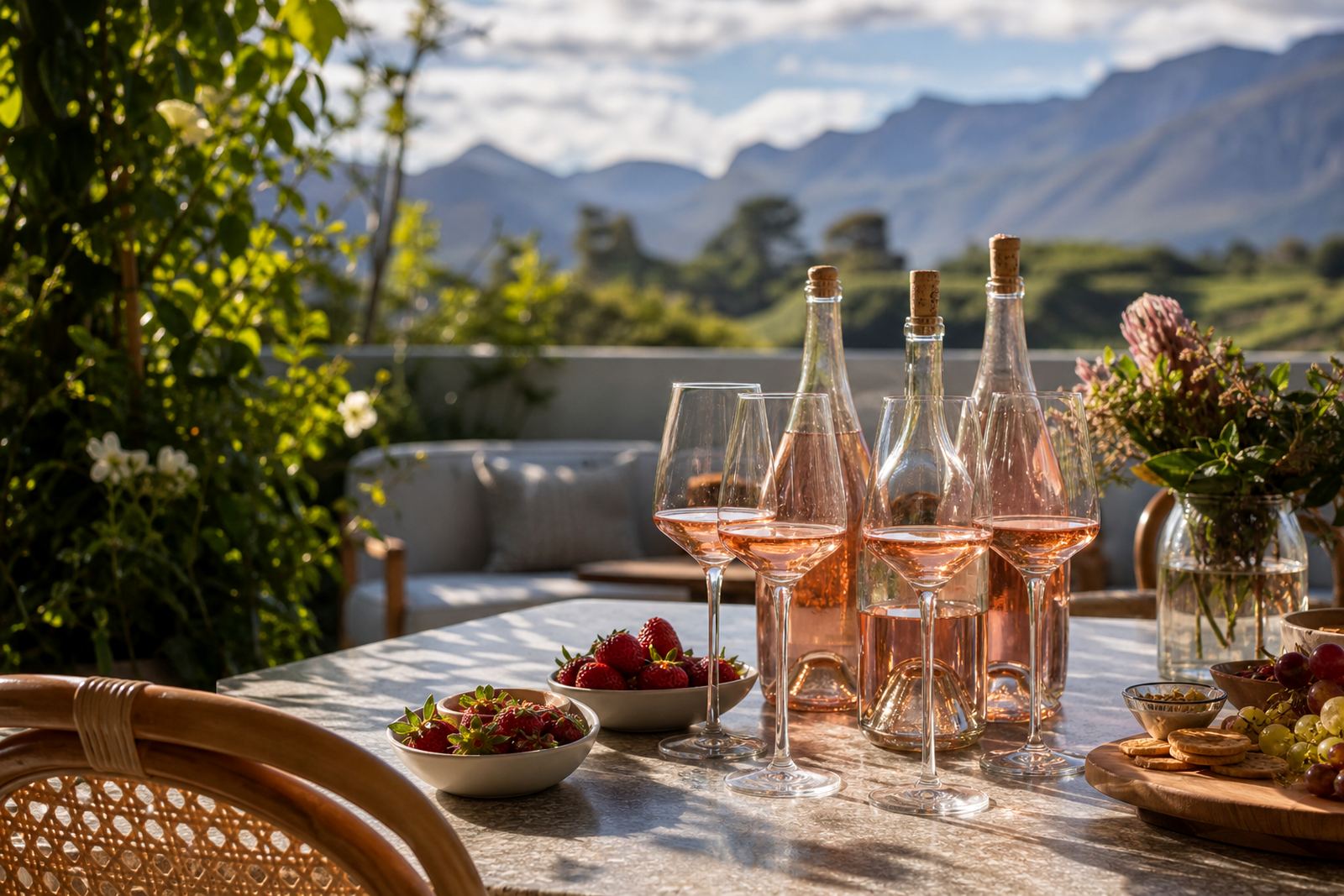
Rosé is made from red grapes, but the grape skins stay in contact with the juice for a short time only. That brief contact gives the wine its pink colour, from onion skin and salmon to a deeper strawberry shade. The winemaking style can be very light and crisp, or fuller with more fruit and a touch more grip, so colour alone does not tell the full story.
In South Africa, rosé is often made for easy drinking in warm weather, especially when vineyards are dealing with strong sun, dry conditions and coastal humidity. A good bottle should still feel balanced, not thin or sugary. If it smells clean and tastes lively on the palate, you are already in the right place.
How Colour, Style and Sweetness Connect
People often choose rosé by colour first, but the shade can be misleading. A pale rosé is not always dry, and a darker pink is not always sweet. The grape variety, skin contact time and whether the wine spent time in steel tank or old wood all change the result. Some wines lean toward red berries and citrus peel, while others show watermelon, peach or herbs.
For a quick read, look at these clues:
- Pale pink often points to a lighter style, but check the label for dry or off-dry wording.
- Strawberry and cherry notes usually mean a brighter fruit profile.
- A soft, round finish can suggest a touch of residual sugar, even if the wine still tastes fresh.
- Higher acidity gives that mouthwatering lift people want on a hot Franschhoek afternoon.
The trick is to taste for balance. A rosé should feel crisp, with enough fruit to carry the finish. If the finish falls away too quickly or tastes jammy, it may be less suitable for food, and sometimes just a bit one-note.
Freshness Is the Main Test for Quality
Freshness is what keeps rosé interesting. You want the first sip to feel bright, clean and energising, not flat or tired. That freshness usually comes from healthy fruit, careful handling and cool storage after bottling. In South African conditions, especially over summer, bottles left in the sun or in a warm car can lose their liveliness fast.
When you taste rosé, check for the following:
- A clean nose with fruit that smells natural, not cooked.
- Acidity that wakes up the mouth without feeling sharp.
- A finish that lingers just enough to invite another sip.
- No heavy oxidative note, which can happen if the wine has been stored badly.
At a cellar tasting evening in Franschhoek, a chilled local rosé often shows best within the first 15 minutes out of the fridge. Let it warm slightly and you may notice more fruit and a better texture. That small change can make a big difference, specially with lighter summer dishes.
A South African Rosé Example from Franschhoek
Take a local rosé made from a red grape such as shiraz, cabernet franc or cinsaut. In the Franschhoek Valley, where evenings can cool down quickly after a hot day, these wines often show a neat line between fruit and freshness. One glass may give you cranberry and rose petal, another may lean towards pink grapefruit and wild strawberry. The best versions stay dry, focused and very drinkable.
This is why rosé works so well at a tasting club or a casual lunch. It is accessible, but not simple. It can start the conversation and still hold its own at the table. If you are hosting guests in Cape Town, Stellenbosch or Paarl, rosé gives you something easy to pour while everyone settles in and the food is still coming out of the kitchen.
For home drinkers, a useful rule is this: if the wine tastes fresh on its own, it will usually do well with food. If it only tastes good when ice-cold, it may not have much structure underneath.
Food Pairing Tips That Actually Work
Rosé is one of the most practical wines for South African tables because it handles spice, salt and smoke better than many people expect. It is especially handy for braai season, picnic baskets and long lunches where different dishes arrive at the same time. You do not need fancy food to make it work either.
Try rosé with:
- Grilled chicken with herbs and lemon.
- Smoked salmon, trout or snoek pâté.
- Greek-style salads with tomato, cucumber and feta.
- Spiced samoosas, bobotie tartlets or mild curry dishes.
- Soft cheeses, especially when served with fruit.
If the wine has a little more body, it can also cope with roast pork or richer salads. Keep serving temperature around 8 to 10 degrees Celsius for a lighter style and slightly warmer for fuller bottles. Too cold and the fruit closes down, too warm and the wine can feel loose. Finding that middle point makes a real differnce.
What to Ask Before You Buy Another Bottle
If you are choosing rosé for a dinner, a gift or a monthly wine box, ask a few practical questions before you commit. Is it dry or off-dry? Which grape made it? Is it meant for early drinking or short-term cellaring? Does the producer want you to enjoy it young, when the fruit is brightest and the freshness still carries the wine?
Use this quick checklist:
- Choose dry rosé if you want food flexibility.
- Choose a fruit-forward style if you want an easy social wine.
- Choose a lighter colour only if you prefer delicacy, not sweetness.
- Store the bottle away from heat and direct light, especially in coastal homes.
Rosé is at its best when it does not try too hard. The style should feel clear, bright and easy to trust. That is why it has become such a favourite for South African gatherings, from a small tasting in Franschhoek village to a bigger celebration in Johannesburg or Durban.