
Why winter changes the way red wine tastes
In winter, many South African homes run cooler than people realise, especially in Franschhoek after sunset or in a coastal flat where the damp air hangs around. A red wine that feels generous in midsummer can taste firmer, more closed and more tannic on a cold night. If the bottle is served at room temperature in a heated room, the alcohol can show first and the fruit can fall away.
The aim is not to make red wine cold. It is to serve it at a point where the aromas lift, the fruit stays bright and the texture feels smooth. For most lighter to medium reds, that sweet spot is often a little cooler than the average lounge temperature. That small shift makes a bigger difference than many people expect, and it helps even a simple supper feel more considered.
The right serving temperature for common red styles
There is no single serving temperature for every red wine. A light, juicy red needs a different approach from a fuller bottle meant for roast lamb or a slow-cooked stew. In winter, the biggest mistake is leaving all red wines next to a warm stove or serving them straight from a very hot kitchen.
- Light reds: 12 to 14 degrees Celsius
- Medium reds: 14 to 16 degrees Celsius
- Fuller reds: 16 to 18 degrees Celsius
- Very warm room or fireplace: cool the bottle for 15 to 20 minutes before pouring
If you are not sure, start slightly cool and let the wine open in the glass. In a South African winter, that is often easier than trying to rescue an over-warm bottle after the first pour. A bottle taken from a cool storeroom, or even from the lower shelf of the fridge for a short time, can be spot on by the time the glasses are filled.
Simple steps to serve red wine without losing balance
Good serving is mostly about control. You do not need special equipment, only a bit of attention to the bottle and the room. This matters when you are hosting in Cape Town with a sea breeze, or in Johannesburg where the nights can be dry and cool, because temperature changes happen fast once the bottle is open.
- Stand the bottle upright for a while before opening so any sediment settles
- Use clean glasses with a tulip shape so the aromas gather properly
- Pour small amounts first and taste before topping up
- Keep the bottle away from direct heat, sunlight and a hot mantelpiece
- If the wine feels tight, swirl gently rather than over-aerating straight away
A little patience goes a long way. Letting the wine breathe for ten to twenty minutes can soften sharper edges, but leaving it exposed for too long can flatten the fruit. With winter reds, the best result often comes from a modest decant and then steady sipping through the meal.
Food pairings that work in colder weather
Winter food calls for red wine that can stand up to richer flavours without overpowering them. Think slow-braised beef, venison, mushroom pie, roast chicken with herbs, or a tomato-based stew that has had time to thicken. In South African homes, a lamb dish with rosemary and garlic is a reliable match, especially when the weather turns chilly and the table is full.
Balance is what matters. A wine with enough freshness will cut through cream, fat and smoke better than a heavy bottle with no lift. If the meal has heat from spices, choose a red with softer tannins and brighter fruit. That keeps the dinner comfortable rather than making the wine feel too big for the plate.
At a winter gathering in Franschhoek, a simple bottle served with roast root vegetables, a mushroom tart and a pan of bobotie can work better than a very rich wine with a heavy meal. The food and wine should feel like they belong to the same evening, not fight for attention.
How to store an opened bottle on a cold night
Once a bottle is open, winter conditions can help and hinder at the same time. Cooler air slows oxidation a little, but a bottle left half-finished on a dining table can still lose its shape by the next day. If you are saving some for later, close it well and store it upright in the fridge, even for red wine. That is one of the easiest ways to preserve the last glass for tomorrow evening.
- Re-cork the bottle as soon as dinner is over
- Keep it upright so less surface area is exposed to air
- Chill it in the fridge, then bring it back to a cooler room temperature before serving again
- Finish opened bottles within two to three days for best flavour
If your home gets very dry from indoor heating, the wine can seem more brittle the next day. A short rest at room temperature before pouring helps, but do not leave it next to a heater. Cold storage first, then a gentle return to serving temperature is usually the safest path.
A practical winter pairing example from the Cape Winelands
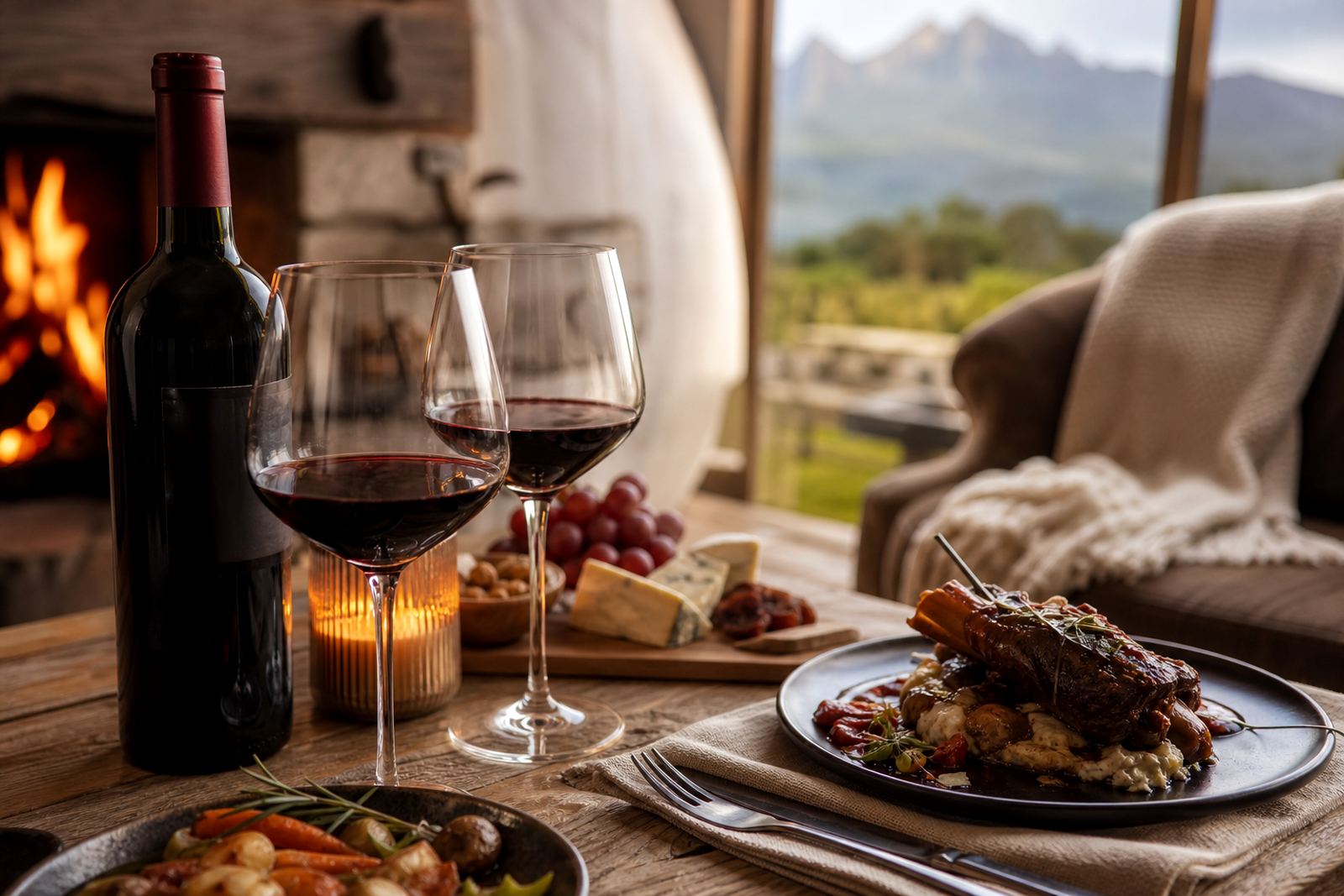
Picture a Thursday evening in the Cape Winelands after a cold front has pushed through. The mountain air is crisp, the patio is too cold for long sitting, and everyone has moved indoors. A bottle of medium-bodied red is brought out with a pot roast, baked potatoes and green beans. If that wine is poured straight from a warm kitchen shelf, the alcohol can feel heavy and the fruit may seem dull. Cool it slightly first, and the same bottle can taste far more lively and balanced.
That is the point of winter serving. It is not about making a red wine fancy, and it is not about masking the style. It is about helping the bottle show its best side in the season it is being enjoyed. Whether you are pouring for two or hosting a small group, the right temperature and food pairing can make a modest bottle sing without losing its shape.
If you enjoy learning as you taste, winter is a good time to slow down and notice how different reds respond to the weather. A bottle that feels too firm one night may be perfect with a warmer room, a wider glass or a different dish the next time. Small changes, done well, make all the difference.