

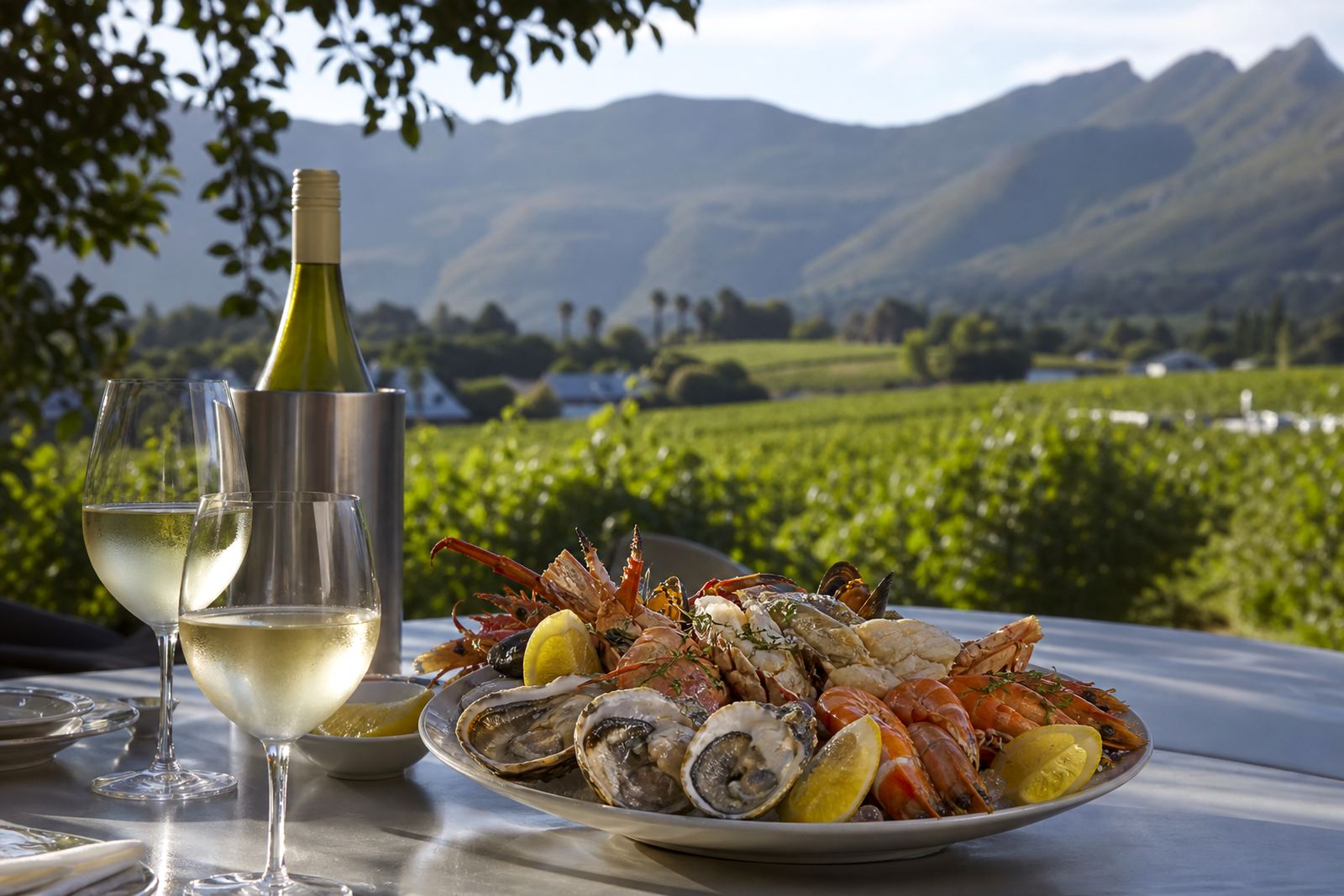
Start With the Sauce, Not Just the Fish
When people ask what white wine goes with seafood, the real answer is often hidden in the pan. A piece of grilled hake needs something different from creamy mussels, and chilli prawns ask for a very different glass than lemon-butter calamari. If you start with the sauce, seasoning and cooking method, the choice gets much easier.
As a general guide, keep the wine as light or fuller bodied as the dish. Delicate seafood works best with crisp whites that bring freshness. Richer dishes, especially those with cream, butter or cheese, can handle a wine with a little more weight. That balance is what keeps each sip clean rather than heavy.
- Grilled, steamed or lightly fried seafood usually suits a leaner white.
- Cream-based sauces need more texture in the wine.
- Garlic, herbs and lemon lift the wine and food together.
- Chilli calls for freshness, not too much oak or sweetness.
Crisp Whites for Clean, Simple Seafood
For plain oysters, snoek pâté, grilled line fish or a simple prawn salad, reach for a white with bright acidity and a dry finish. These wines cut through salt and oil, and they refresh the palate between bites. That is especially useful when you are serving food outdoors or during a warm coastal afternoon where richer wine can feel too heavy.
At home in Franschhoek or along the Cape coast, this style works well with dishes that lean on freshness rather than richness. Think lemon, cucumber, fennel, capers, parsley and a little olive oil. The seafood should still taste like seafood, and the wine should be the clean final note.
- Best with oysters, sashimi, grilled hake and steamed mussels.
- Works well with lemon, herbs, capers and light vinaigrettes.
- Serve chilled but not ice-cold, around 8 to 10 C.
- Use narrow glasses if the evening is windy or cool.
When Cream, Butter and Cheese Enter the Picture
Seafood in a creamy sauce changes the whole pairing. A dish like creamy fish pie, mussels in a garlic cream sauce or a baked seafood pasta needs a white with more body so it can stand up to the richness. Too light, and the wine disappears. Too oaky, and the sauce can taste flat or overly heavy.
Look for a wine with ripe fruit, moderate acidity and a bit of roundness. It should still be dry, but not sharp. This is where many home cooks make the mistake of serving the coldest wine in the house because it feels refreshing. In fact, a slightly fuller white often tastes better and keeps the dish balanced, especially if the meal is slow and conversational.
- Choose fuller whites for seafood lasagne, chowder or creamy pasta.
- Avoid very sour wines with rich sauces, they can clash.
- If the dish has cheese, keep the wine dry and focused.
- Serve with warm bread or samp sides if the meal is more substantial.
Spice, Heat and Coastal Flavours Need Careful Balance
South African seafood often comes with strong flavour. Think peri-peri prawns, Cape Malay fish curry, pickled mussels or a spicy seafood stew. These dishes need a white wine with enough freshness to handle heat, but also enough fruit to soften the spice. Too much sweetness can make the dish taste sugary, while too much oak can dull the flavours.
The safest move is to keep the wine dry, bright and fruit forward. If the dish is lightly spicy, a crisp white still works well. If the heat is stronger, chill the wine properly and make sure the food has enough acid from lime, tomato, vinegar or tamarind. That way the wine feels like part of the meal, not a separate thing you are trying to force in.
- Good with prawn curry, fish curry and chilli calamari.
- Use citrus, tomato or vinegar in the dish to bridge the wine.
- Keep sweetness low unless the spice level is gentle.
- Serve with rice, soft flatbread or pap for a steadier finish.
A Simple South African Table Example
Picture a summer supper in Stellenbosch after a hot day, with grilled yellowtail, baby potatoes and a salad with cucumber and dill. This is a classic home pairing problem solved by freshness. You want a white that tastes lively, with enough acidity to work through the oil from the fish and the dressing on the salad.
Now change the same table to a winter evening in Durban with a creamy prawn and corn chowder. The wine needs a little more texture, because the soup is richer and the weather is cooler. The point is not to chase a perfect rule, but to notice what is on the plate and match the mood of the meal. Once you do that a few times, pairing becomes second nature.
- Warm weather usually favours lighter, sharper whites.
- Cooler evenings can take more body and roundness.
- Local fish, prawns and shellfish all change the balance slightly.
- Think about the whole plate, including salad, starch and sauce.
Serving Advice That Makes a Real Difference at Home
Good pairing can be spoiled by poor service. White wine should be cold, but not so cold that flavour disappears. If you are serving seafood at home, keep the bottle in the fridge long enough to chill properly, then let it sit for a few minutes before pouring. That small step helps the wine open up, especially if you are serving with richer food.
Glass choice matters less than people think, but a clean glass with enough room for aromas always helps. Also, do not ignore the weather. In coastal areas, humidity and heat can push the wine out of balance quickly if it sits on the table for too long. Open what you need, keep the rest cool and pour smaller servings if the meal will run long. Small details like that make the whole evening feel better, and less rushed.
- Chill white wine, then ease off the fridge before pouring.
- Use smaller pours if the meal will last through load-shedding or a long sunset supper.
- Keep bottles out of direct sun and away from hot kitchens.
- Pour fresh top-ups as the food changes from starters to mains.