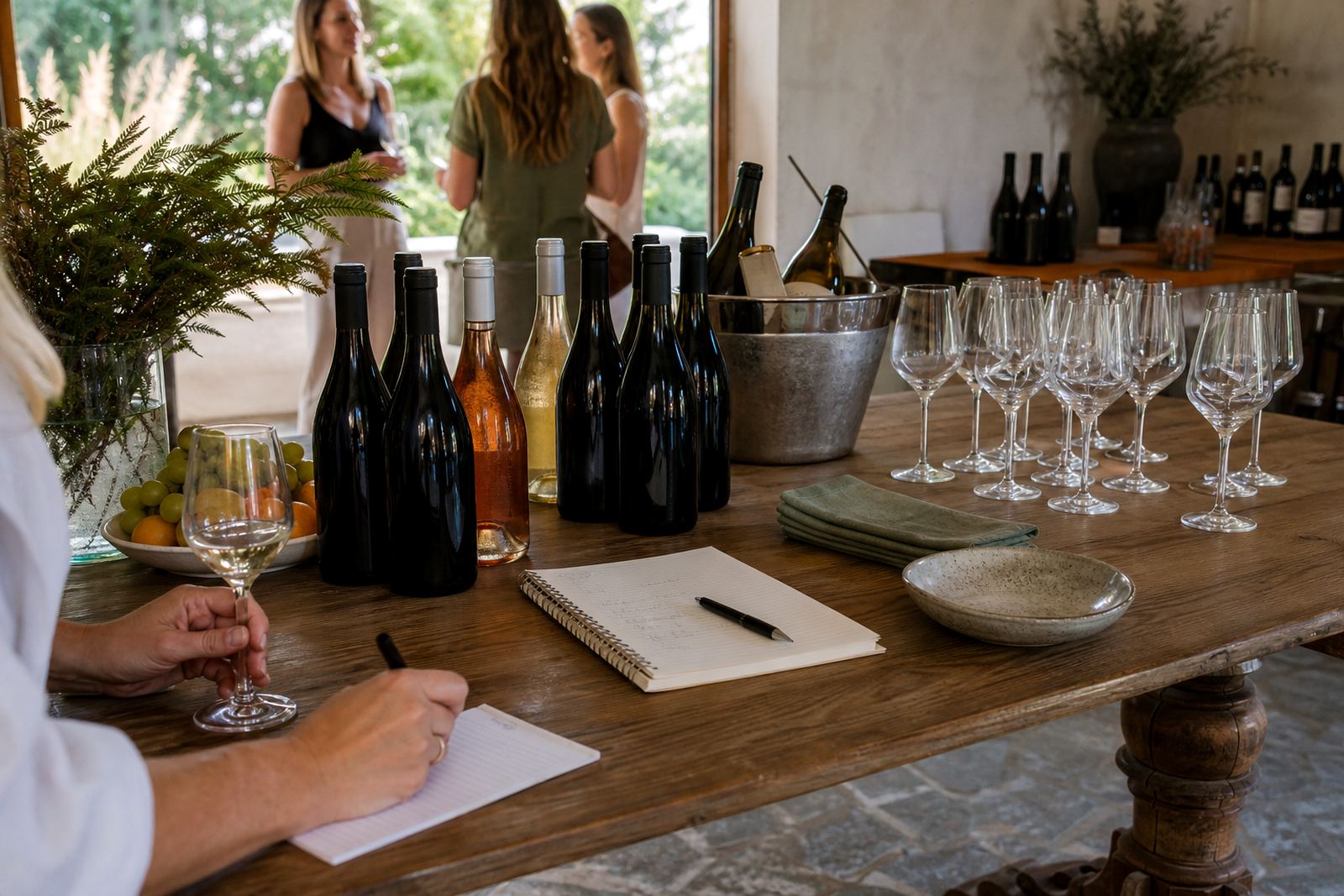
Start with the guest count, then trim for real drinking habits
The quickest mistake is to count every invited guest as a full bottle drinker. In practice, some people will drink less, some will switch between wine and bubbly, and a few will not drink at all. A useful South African rule is to plan for about half to three quarters of a bottle of wine per adult for a standard social event with food. For bubbly, allow one glass per person if it is only for a toast, or more if it is the main drink for the evening.
If your gathering is in Franschhoek, Cape Town or Stellenbosch and the weather is warm, people often drink a little more sparingly at the start then settle in later. On the Highveld, especially in Johannesburg, evenings can run longer indoors and that usually means a steadier pour. The point is simple: match the drink plan to the mood of the event, not only the headcount.
- Light social gathering with snacks: 1 bottle for every 3 to 4 adults
- Dinner with a full meal: 1 bottle for every 2 to 3 adults
- Long celebration or party: 1 bottle for every 2 adults
- Toast only bubbly: 1 bottle for every 6 to 8 guests
Use the event length and food menu to fine tune the order
A two-hour engagement bubbly evening needs a different order from a six-hour birthday with a braai and dancing. Food slows wine consumption because guests are eating, while a light canapé spread can leave glasses empty sooner. Rich dishes, spicy sauces and grilled meats also make many guests go back for another pour, especially with red wine or a dry sparkling option.
For a buffet, think in phases. The first hour is usually the fastest for sparkling wine and white wine. The middle of the event sees more balanced drinking, while the last stretch often turns into top-up pours only. If the menu is heavy on seafood, roast chicken or creamy pasta, white wine and bubbly may move faster than red. If there is a braai with lamb chops, boerewors or roast beef, red wine often gets more attention.
- 2 hour standing event: plan about 1 glass per guest per hour
- 3 to 4 hour dinner: plan about 1.5 to 2 glasses per guest per hour
- 5 to 6 hour celebration: increase the total by 20 to 30%
- Hot summer afternoon: add extra chilled water and a small buffer of bubbly
A practical bottle guide for wine and bubbly
One standard bottle of wine is 750 ml and gives about five to six glasses, depending on the pour. A standard sparkling bottle also gives around five to six glasses if you are using flute glasses or smaller celebration pours. If you are serving both wine and bubbly, split the total across the drinks rather than ordering one type only and hoping it covers everyone.
As a working guide, start here and adjust to the style of your event. These numbers are useful for private home tastings, birthday parties, wedding planning or corporate evenings where the drinks need to land neatly without waste.
- 10 guests: 4 to 5 bottles total for a short event, 6 to 8 bottles for a longer one
- 20 guests: 8 to 12 bottles total, depending on food and length
- 30 guests: 12 to 18 bottles total, with at least 2 to 4 bottles of bubbly if there is a toast
- 40 guests: 16 to 24 bottles total, with a mixed selection for different tastes
If your group includes both wine lovers and bubbly fans, a split such as 60% wine and 40% sparkling is often a safe place to begin. For a summer party in Durban or Somerset West, it also helps to chill a little extra because warm bottles get opened faster than planned.
Choosing the right mix: red, white, rosé and sparkling
There is no fixed rule that says every party needs the same mix. The best selection depends on season, menu and the time of day. In warmer months, white wine, rosé and sparkling usually do more of the work. In cooler months, red wine often carries the evening, especially if the meal is meat-led or the event starts after sunset.
A balanced mixed order is often better than buying only one style. Guests like choice, and a few bottles of each type can save the day when preferences are varied. If you are planning a cellar team building session or a corporate tasting in Constantia or Paarl, variety helps keep the conversation going and avoids a table full of one style nobody is drinking.
- Summer lunch or garden party: more white, rosé and bubbly
- Winter dinner: more red, with a smaller sparkling option for arrival
- Mixed crowd: keep at least one red, one white and one bubbly in the line-up
- Sweet tooth or dessert course: consider an extra sparkling bottle for the end of the meal
Do not forget the extras that affect the final count
Party wine quantities are not only about bottles. Glass size, ice, cooler space and the pace of service all affect how much gets poured. If people top up their glasses before they are empty, the consumption goes up quickly. If the event is self-service, it is easier to lose track of how much has been opened. That is why it helps to designate one person to keep an eye on the stock.
In the Western Cape, especially at outdoor venues, temperature control matters. Direct sun can flatten bubbly and warm white wine in no time. In Johannesburg, a load-shedding slot can disrupt chilling and serving, so it is worth having enough pre-chilled bottles ready before guests arrive. If the event is near the coast, humidity can also make service slower if bottles are not prepped properly. A good cooler setup and enough ice makes a bigger difference than most hosts expect.
- Plan 1 bottle of still water for every 2 wine drinkers
- Keep spare ice or freezer packs for outdoor events
- Have one extra bottle in reserve for every 10 to 12 guests
- Pre-chill bubbly and white wine at least 4 hours before service
A Franschhoek example you can copy for your own event
Say you are hosting 24 guests in Franschhoek for an engagement bubbly evening with canapés and a light dessert table. The event runs for four hours, with a toast at the start and relaxed socialising after that. A practical order would be 8 bottles of wine and bubbly combined, with a bias towards sparkling at the beginning and white wine for the rest of the evening. If the guest list leans female and the crowd enjoys sparkling, you might move that to 10 bottles total.
Now compare that with a winter birthday in Johannesburg for 30 people, with a proper sit-down meal and a later start. Here the count can move closer to 15 or 16 bottles, with more red wine in the mix. The lesson is that the same headcount can require very different quantities depending on the format. That is why a simple estimate, then a small adjustment for the event style, usually works best.
For couples planning a wedding, or a business arranging a tasting evening in Cape Town, Stellenbosch or Durban, the safest approach is to build in a small buffer. It is cheaper to have one or two bottles left over than to run dry before the speeches are done. And if you are unsure, keep the order simple enough to chill, serve and count without fuss.