
Start With One Practical Glass Shape
If you are setting up for home tastings in Franschhoek, Stellenbosch or a flat in Johannesburg, the best place to begin is with one all purpose glass shape. A medium sized tulip style glass works well for most red, white and sparkling wines because it narrows slightly at the top and helps direct the aroma to your nose. You do not need a different glass for every bottle on the table.
For everyday use, choose something with a stem if you can. It keeps your hand away from the bowl, so the wine stays cooler and you do not leave fingerprints all over the glass. Stemless glasses are easier to store and less likely to tip over, but they warm faster in the hand, especially in a warm Cape Town kitchen or on a summer patio in Durban.
What Size Works Best At Home
Many home buyers assume bigger is always better, but a very large glass can be awkward to store and easy to over pour. For most households, a bowl that holds around 450 ml to 550 ml is a sensible middle ground. That gives enough room to swirl the wine without splashing, while still fitting in a normal cupboard or dishwasher rack.
It also helps to think about the pour, not just the glass. A standard tasting pour is only about 60 ml to 90 ml. If you are hosting a small group in Paarl or doing a Sunday tasting with friends in Somerset West, one bottle can cover a few people without needing oversized glassware. The wine has more space to open up, and the table stays neat too.
- Choose 450 ml to 550 ml bowls for general home use
- Look for a rim that feels smooth, not thick or heavy
- Keep the glass light enough to hold comfortably for longer tastings
- Check that it fits your cupboard shelves before buying a full set
When To Use Separate Glasses For Bubbly
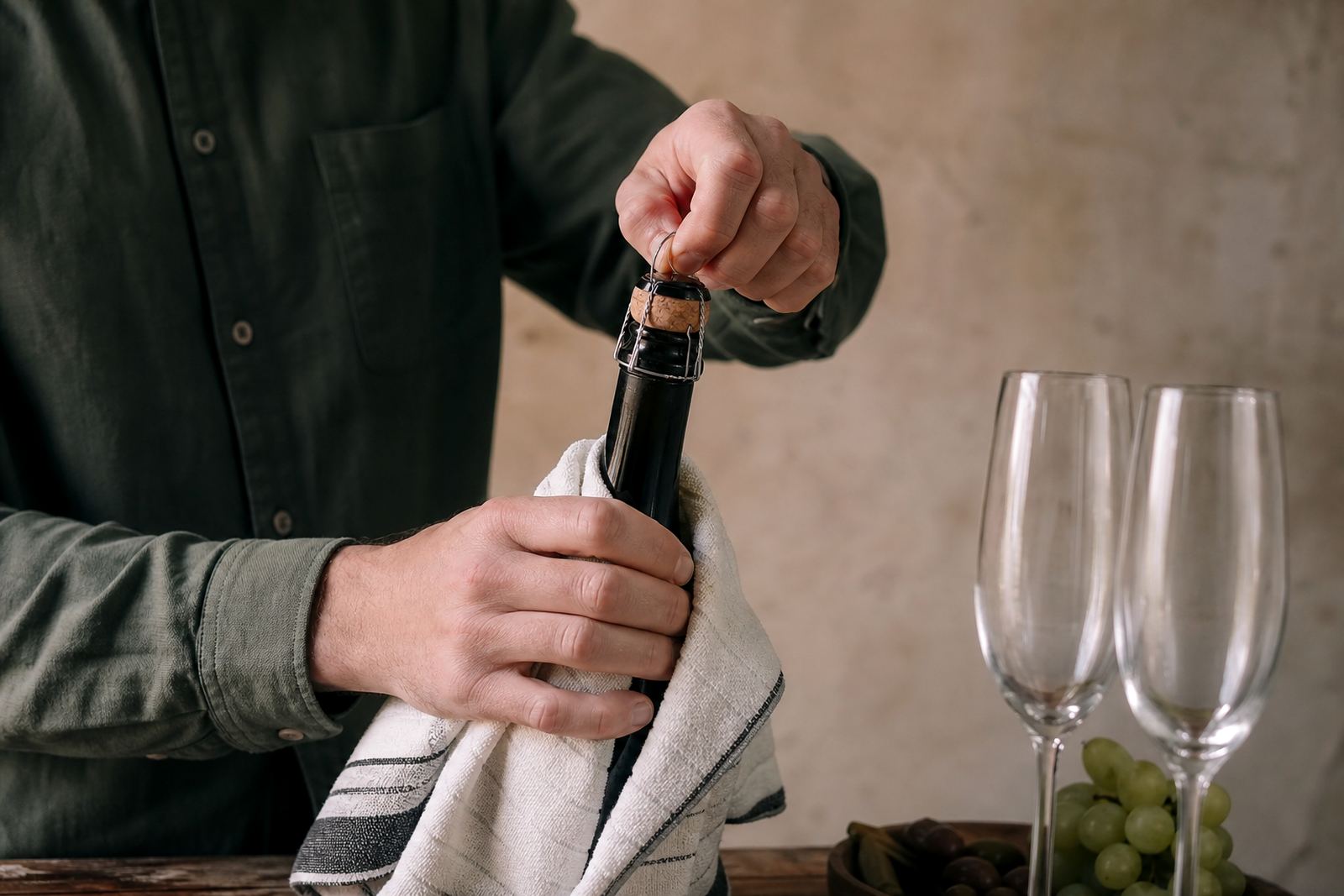
Bubbly is best enjoyed in a glass that lets you see the fine stream of bubbles and keeps the aromas in the bowl. A flute is the classic option, but a narrow tulip shape often gives a better balance of aroma and sparkle. It is a good choice for engagement bubbly evenings, birthday celebrations and casual toasts at home.
If you only want to buy one set for both wine and bubbly, a tulip shaped glass can do both jobs well. It will not hold the fizz quite as long as a proper flute, but it is far more useful for mixed tasting evenings. For many South African homes, that is the practical answer. You want less clutter, less washing, and fewer glasses taking up space when the power is off and the dishwasher cannot run.
- Use tulip shapes if you want one glass for wine and bubbly
- Choose a flute if you mostly serve sparkling wine on its own
- Avoid very wide glasses for bubbly if you want the bubbles to last longer
- Wash sparkling glasses gently to keep them clear and scratch free
Matching Glassware To Different Wine Styles
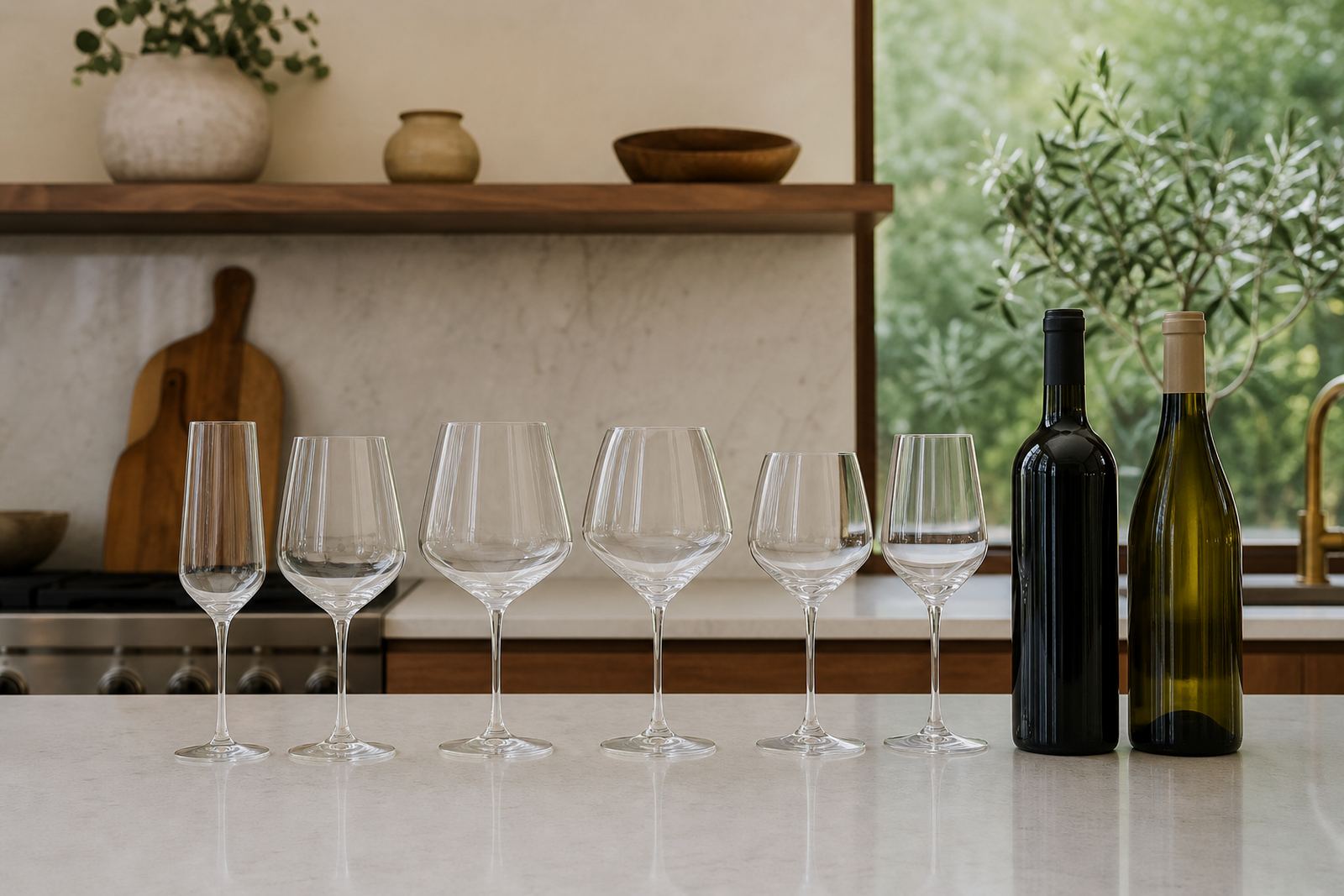
You do not need a separate cabinet for each wine style, but it helps to know what each shape does. A slightly wider bowl gives red wines more air and makes the aromas easier to notice. A medium bowl suits crisp whites and lighter red wines, while a narrower bowl is useful for aromatic wines and sparkling styles.
Here is a simple home approach that works well:
- One medium tulip glass for most tasting sessions
- One larger glass for fuller reds if you enjoy richer styles
- One narrow glass for bubbly and lighter aromatic wines
If you are hosting a food pairing dinner in Constantia or a virtual group tasting with friends in Durban and Johannesburg, this small mix gives you enough flexibility without overcomplicating the setup. The point is to taste the wine clearly, not to turn the evening into a glassware lesson.
How Many Glasses A Home Should Keep
A good rule for most homes is to keep a set of six to eight matching glasses, plus a couple of extras for breakages. That covers a family supper, a small tasting group, or a relaxed evening with neighbours. If you often host larger groups, consider twelve so you are not washing and drying between rounds.
Think about storage as much as quantity. Thin glass looks lovely but can chip if it is rattling around in a crowded cupboard. In coastal homes, especially near Durban or along the Cape coast, humidity can leave glassware looking dull if it is stored damp. Dry it properly before putting it away, and leave enough space between items so the rims do not knock together.
For load-shedding days, simple matters too. A set that can be washed by hand and dried quickly is often better than very delicate glass that needs careful handling. Practical glassware keeps a tasting evening moving, even when the kitchen schedule is not ideal.
Cleaning And Care Without Fuss
Clear glass shows every watermark and fingerprint, so a little care goes a long way. Rinse glasses soon after use, especially if the wine was sweet or bubbly, because residue can cling to the bowl. Use warm water and a mild detergent, then dry with a soft lint free cloth.
If you use a dishwasher, keep the glasses secure and leave space between them. Too much movement can cause chips at the rim. Avoid strong scented detergents if you are planning a tasting, because the smell can linger and affect the first sip. For regular home use, plain and simple is usually best.
- Rinse soon after use to stop staining and residue
- Dry fully before stacking or storing
- Hold by the stem or base to avoid warming the bowl
- Check for chips before serving guests
A Local Example For Easy Hosting
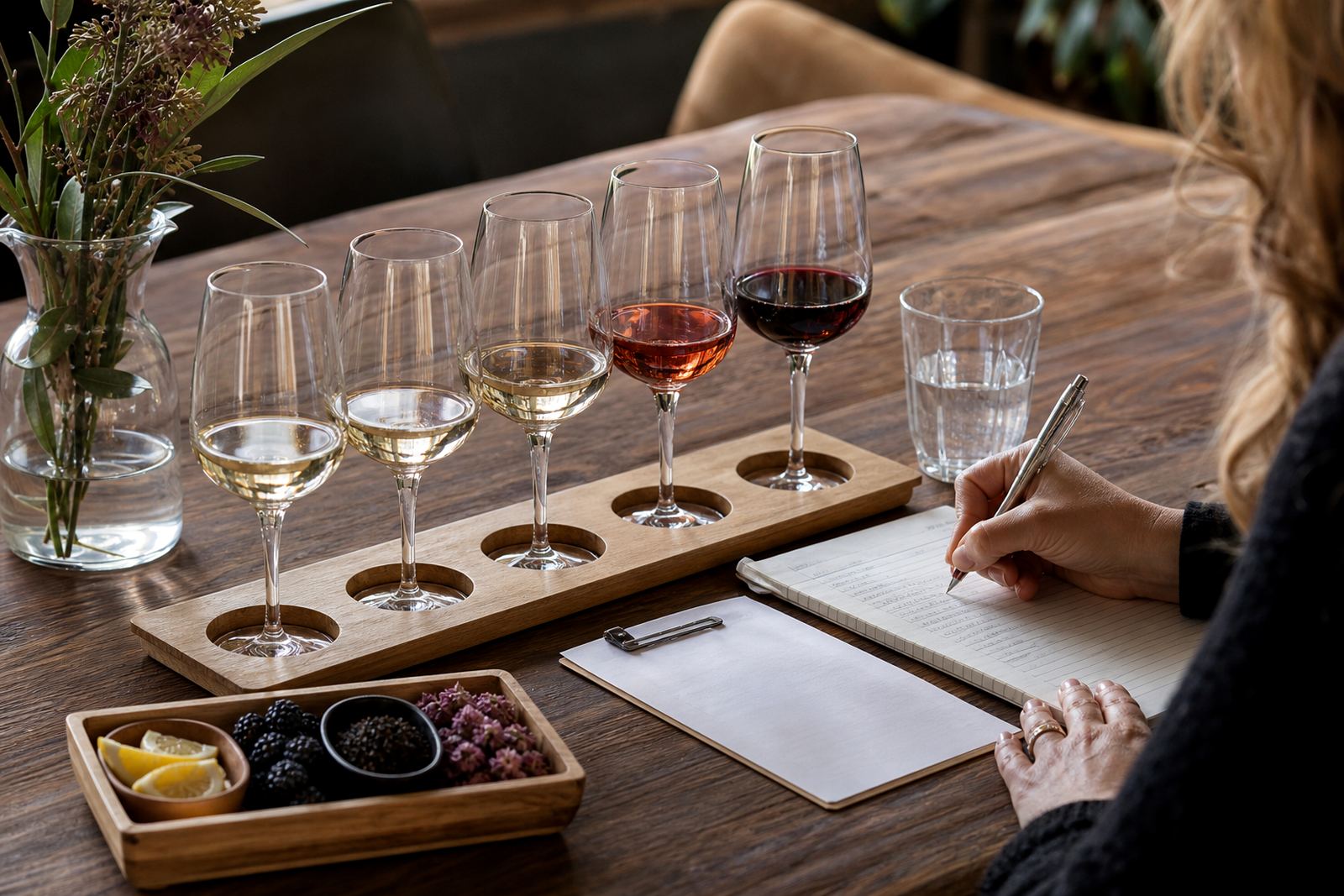
Picture a small tasting at a home in Franschhoek village. The table has one tulip shaped glass per guest, a jug of water, and a few simple snacks like bread, cheese and olives. The wines are poured in small amounts, the glasses are easy to hold, and the conversation stays focused on what is in the glass. There is no need for a pile of special shapes or a complicated set up.
That is the real value of good glassware at home. It makes the wine easier to enjoy, the evening easier to manage, and the clean up much quicker after everyone has gone. If you are building your own tasting routine, start with a practical set that suits the way you actually live, not the way a showroom might look.
Ching Ching Cellar often sees that the best home tastings are the ones that feel relaxed. One or two good glass shapes, a steady pour, and a little care is usually enough.