
Start With the Right Temperature and a Quiet Workspace
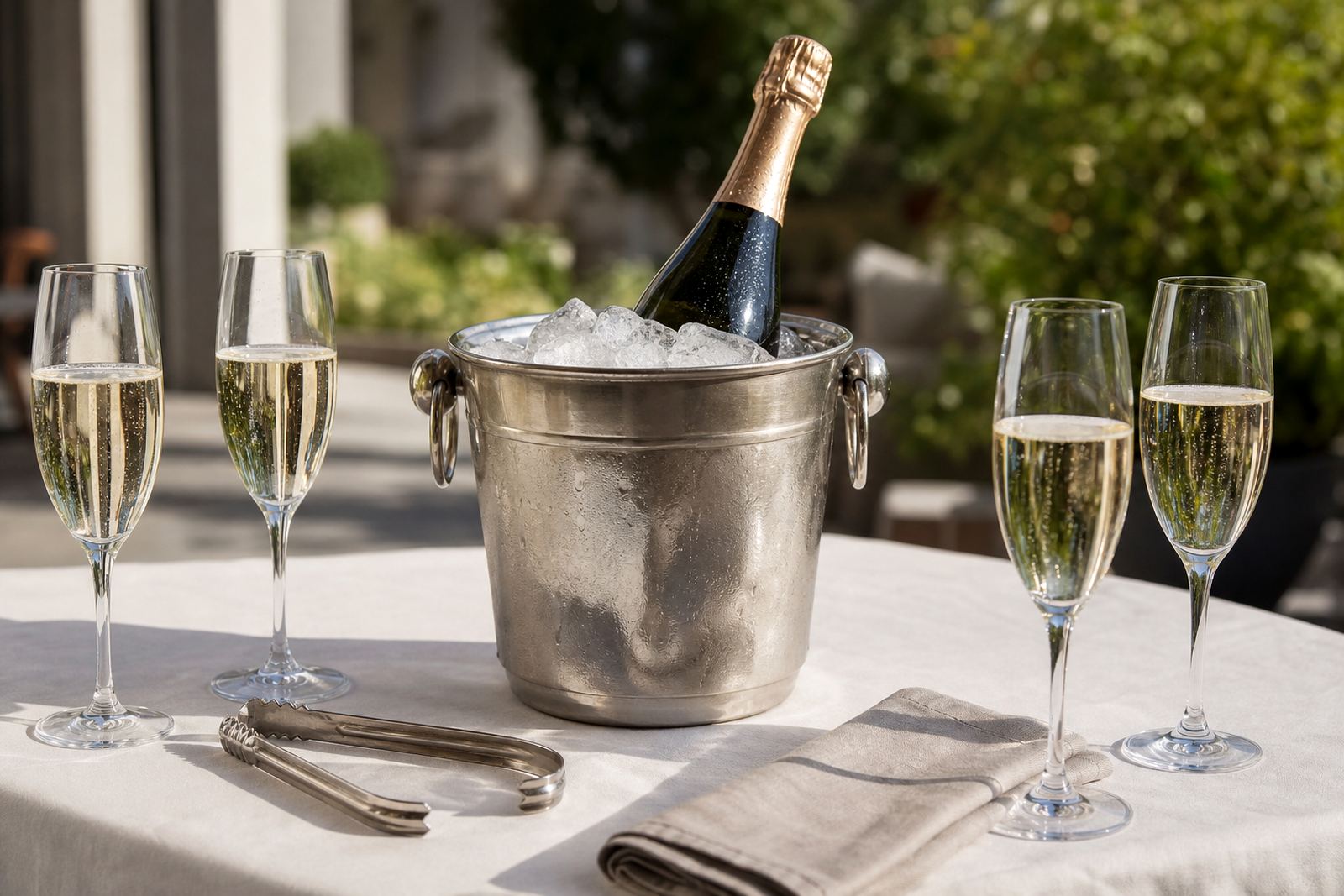
The safest bottle is a cold bottle. Chill sparkling wine in the fridge for at least 3 hours before opening, or use an ice bucket with water and ice for 20 to 30 minutes if you are short on time. A colder bottle holds the pressure better, which means less foaming and less chance of a sudden pop.
Choose a flat surface with space to work. Keep the bottle away from children, pets and glassware that can tip over. At a tasting in Franschhoek or a long table setup in Somerset West, I always tell guests to clear the area first. You want one steady hand and no rush.
- Do not shake the bottle, even if it has travelled in the boot on a hot day.
- Wipe away any condensation so the bottle is easier to grip.
- Have two clean glasses ready before you remove the foil.
Check the Cork and Cage Before You Twist Anything
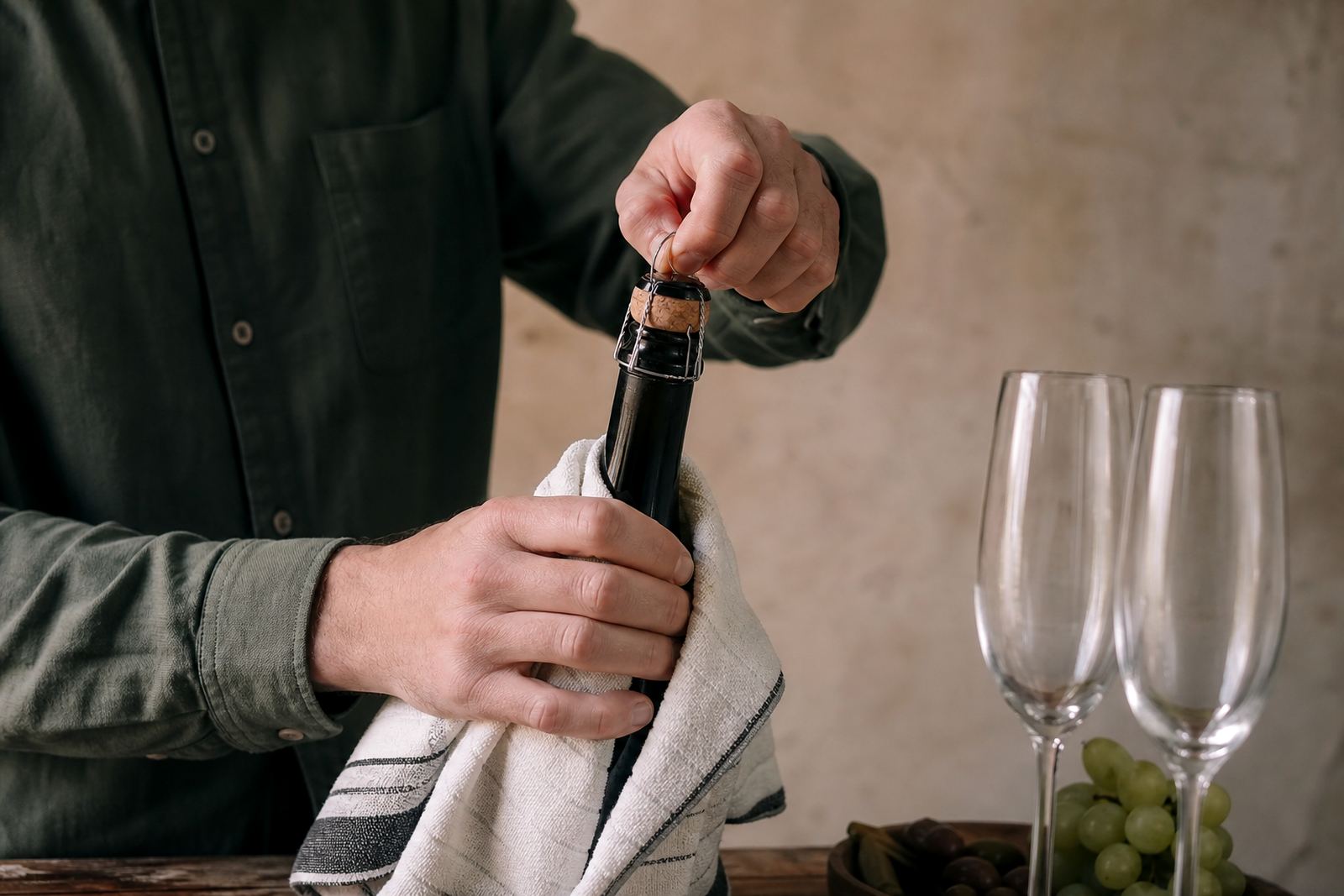
Hold the bottle at a slight angle and keep one hand over the top at all times. Remove the foil carefully, then loosen the wire cage while your thumb stays on the cork. The cage can lift a little as you turn it, so keep firm control of both parts. Never point the bottle at yourself or anyone else, even for a moment.
The best method is slow and steady. In a windy courtyard in Cape Town or on a balcony in Durban where humidity can make everything slippery, patience matters. If your hands are wet, dry them first. A towel can help with grip, but do not wrap the bottle so tightly that you lose control.
- Count the cage turns if you need help keeping track, usually six half turns.
- Keep the bottle angled away from lights, faces and fragile items.
- If the cork starts to rise by itself, keep pressure on it and pause.
Use the Gentle Twist, Not the Loud Pop
Once the cage is off, place a folded towel over the cork if you want extra control. Hold the cork with one hand and the bottle base with the other. Turn the bottle slowly, not the cork. You are looking for a soft sigh, not a bang. The pressure inside the bottle should release little by little.
This is the part that often worries first-time hosts at a birthday tasting in Johannesburg or a bubbly evening in Paarl. The trick is to let the bottle do the work. If the cork feels stuck, do not force it. Warm hands, a crowded room and a bottle that has been sitting in the sun can all make the pressure less predictable.
- Twist the bottle base about a quarter turn at a time.
- Keep your face to the side, not above the neck.
- Stop the moment you hear the first gentle hiss.
If Foam Rises, Stay Calm and Manage It Slowly
Sometimes the bubbles climb faster than expected. That does not mean anything is wrong. If foam starts to rise, lower the bottle angle a little and pause for a few seconds. Let the gas settle before you continue. A small amount of fizz near the neck is normal, especially if the bottle was moved around during delivery or if it is a sweeter style.
Have a spare cloth nearby and keep the bottle over a sink or tray if you are unsure. At club events we often open bottles near the prep table so any overflow can be handled quickly. In load-shedding conditions, when a room might be warmer than usual and the fridge has not held temperature perfectly, extra caution helps.
- Do not keep twisting once foam reaches the lip.
- Set the bottle down for a few seconds if needed.
- Pour the first small glass slowly to release excess pressure.
Serve Cleanly and Keep the Bottle Safe for the Table
After opening, wipe the neck and pour into clean glasses at a slight angle. Start with a small amount in each glass to protect the bubbles, then top up once the foam settles. A tulip-shaped glass works well because it holds the aromas and keeps the sparkle for longer.
If you are serving with food, make sure the bottle stays chilled in an ice bucket between pours. This is especially useful at outdoor events in Stellenbosch, where warmer evenings can flatten the fizz more quickly. Keep the bottle upright after opening and avoid leaving it in direct sun.
- Pour 80 to 100 ml first, then return to top up if needed.
- Keep a serviette nearby for drips around the neck.
- Use a stopper if the bottle will be open for more than 20 minutes.
A Franschhoek Example for Home Tastings and Small Celebrations
At a small family celebration in Franschhoek, the safest way to open bubbly is usually the calmest way too. One person handles the bottle, another clears glasses, and everyone else stays a step back until the cork is out. That simple routine works just as well for a club tasting as it does for a private home dinner.
For group events, assign the opening to one confident person and keep the rest of the room focused on the first pour. If you are planning a birthday tasting party, an engagement bubbly evening or a food pairing dinner, build a short pause into the service. The bottle will be easier to open, and the moment will feel more relaxed.
Our advice is simple: cold bottle, firm grip, slow twist, no rushing. Once you have done it a few times, opening sparkling wine becomes second nature and not something to worry about.
When to Ask for Help or Choose a Different Opening Method
There are times when it is sensible to stop and ask for help. A damaged cork, a dented bottle neck or a bottle that has been shaken during transport can make opening more difficult. If the cork looks uneven, or if the cage feels loose, do not force the issue. Set the bottle down and let it cool a little longer if needed.
For large gatherings, corporate functions and wedding planning, it helps to have a trained person handle the bubbly service. That keeps the table safe and makes sure the first glasses are poured properly. Good opening practice is not about showing off, it is about keeping the bottle steady and the people around it comfortable.
- Stop if the cork cracks or moves in an unusual way.
- Replace warm bottles with chilled ones before serving.
- Keep the bottle upright if you need to wait before opening.