
Why Temperature Changes the Way Bubbles Taste
Serving sparkling wine at the right temperature makes a real difference to the smell, the fizz and the mouthfeel. If it is too warm, the bubbles escape quickly and the wine can taste a bit loose or overly soft. If it is too cold, the aromas close up and the wine can seem flat even when the bead is fine.
For most sparkling wines, the sweet spot is 6 to 8 degrees Celsius. That is cool enough to keep the bubbles lively but not so cold that you lose the fruit and freshness. In South Africa, where a warm afternoon in Franschhoek or Durban can push a bottle from cool to warm very fast, timing matters as much as temperature.
The Best Ways to Chill a Bottle Without Rushing It
The easiest method is the fridge. Place the bottle in the fridge for 3 to 4 hours before serving. If it has been stored at room temperature, give it longer. A bottle needs time for the whole liquid to cool evenly, not just the glass by the neck.
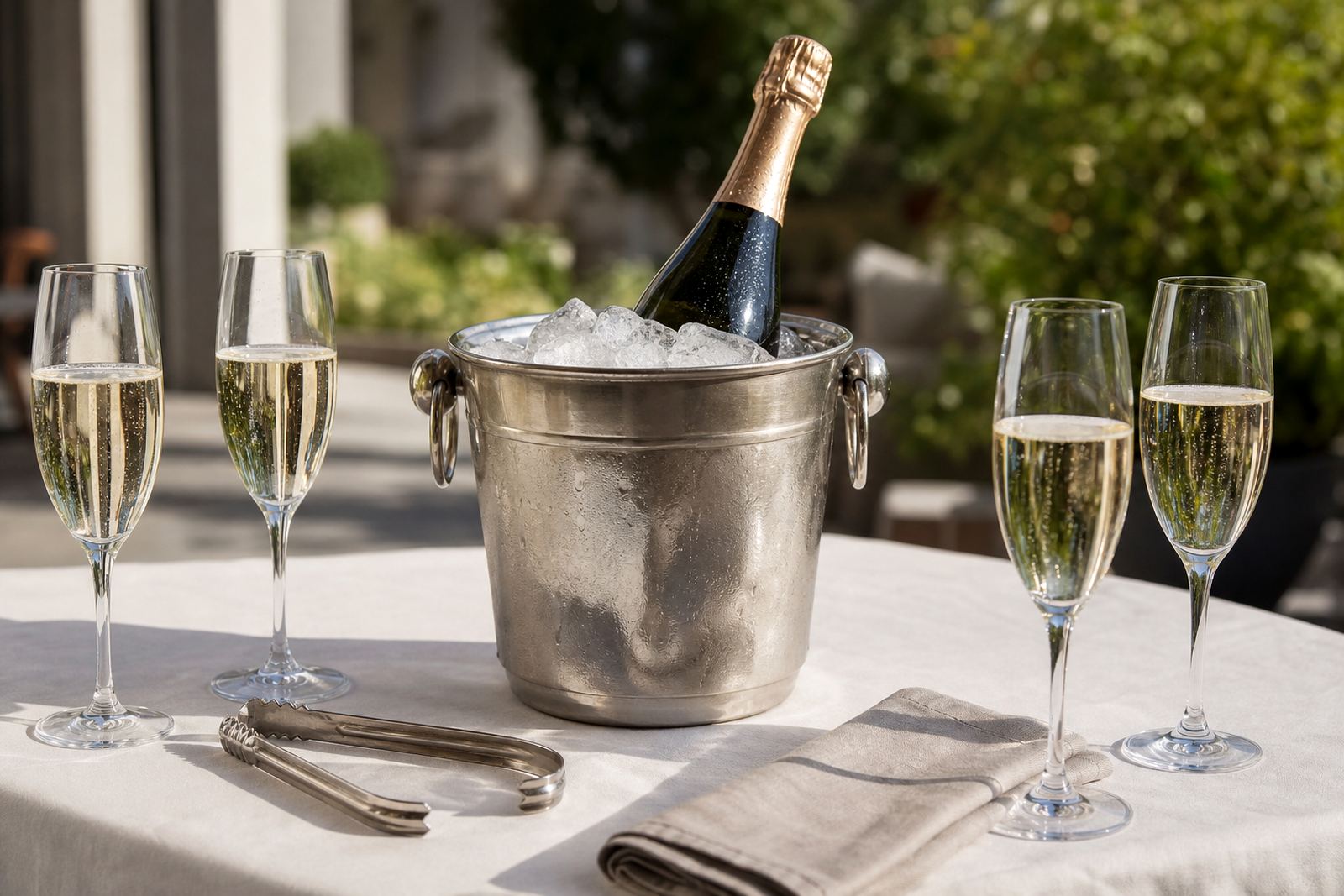
If you are short on time, an ice bucket works well. Fill it with equal parts ice and cold water, then lower the bottle in so the water reaches most of the glass. Add a small handful of salt if you need the chill to happen a bit faster. The salty water pulls heat out quicker than ice alone.
- Fridge: 3 to 4 hours for a standard bottle
- Ice and water bucket: about 20 to 30 minutes
- Freezer: only as a last resort, and set a timer
Never leave a bottle in the freezer and forget it. The liquid expands as it chills, and a forgotten bottle can crack or push the cork out under pressure. That is an expensive mistake and a messy one too.
What to Do When Guests Arrive Early
Many home tastings and small celebrations in South Africa start with the bottle still on the warm side. If you are hosting in Stellenbosch, Somerset West or Johannesburg and guests arrive before your wine is ready, do not panic. Put the bottle in a bucket with ice and water straight away, then keep it in the fridge once it reaches the right temperature.
For a group setting, it helps to chill a few bottles in stages. One can be ready for the first pour while the others stay cold and steady. This avoids opening too many bottles too soon and helps you keep the service neat. It also gives you time to check whether the cork or closure is clean and dry before opening.
- Have a backup bucket ready if the first one warms up
- Keep bottles upright before service so sediment stays settled
- Dry the neck before opening so your grip is secure
At a club evening or birthday tasting, this small bit of planning can save the whole table from flat first glasses and rushed pouring.
Why the Fridge Is Better Than the Deep Freeze
The freezer seems like the quick answer, but it is not the best one. It cools the outside of the bottle fast while the centre stays warmer, so the temperature is uneven. That can make the first glass different from the last. It also raises the risk of overchilling, which hides flavour.
If you must use the freezer, set a timer for 15 minutes at most. Take the bottle out, feel the glass and move it to the fridge or ice bucket if needed. A chilled bottle should feel cold, not icy. That little difference matters more than many people think.
When the goal is freshness, control is better than speed. This is especially true for smaller gatherings where one bottle may be opened slowly over an hour or more. Better to serve at the right temperature than to chase a last minute chill and lose the taste.
Simple Serving Steps for Better Bubbles at the Table
Once the bottle is chilled, handle it with care. Keep it cool until the moment of opening and avoid shaking or knocking it around. Sparkling wine is under pressure, so a calm opening gives you a cleaner pour and less waste.
These basic steps help:
- Use a clean wine bucket with enough ice and water to cover most of the bottle
- Open the bottle away from faces, lights and fragile items
- Pour slowly into tilted glasses to preserve the bead
- Refill the bucket with fresh ice if the service runs longer than 30 minutes
For outdoor events in Paarl or Constantia, keep bottles out of direct sun and away from braais or hot serving counters. Coastal humidity in Cape Town can also make glass sweat quickly, so keep a cloth nearby for dry handling and neat service.
A Practical Franschhoek Example for Home and Club Tastings
At a Franschhoek village tasting, a host may have six guests arriving at 18:30 and a bottle opened too soon at 18:00. The simplest fix is to chill the bottle in the fridge earlier in the day, then move it to an ice and water bucket about 20 minutes before pouring. If the evening is warm, keep the bucket on a towel so it stays steady on the table and does not slip.
This works well for private home tastings, engagement bubbly evenings, small corporate groups and club pop up events too. The same method also helps when load-shedding cuts into your prep time. If the fridge has already done most of the work, an ice bucket can finish the job without fuss.
Good sparkling wine service is not complicated. It just needs a bit of planning, steady cooling and a watchful eye. When you get the temperature right, the wine tastes brighter, the bubbles last longer and the whole table notices.