
Start with three cheeses, not ten
If you are putting together a board for a wine or bubbly evening, three cheeses is usually enough. Too many choices can muddy the tasting, while a small selection lets each flavour show itself properly. A soft cheese, a firm cheese and one with a little tang will cover most home tastings nicely.
For four to six people, allow about 150 g to 200 g of cheese per cheese type. If the group is larger, rather add another board than pile everything onto one platter. Keep the pieces separate so the brine from one cheese does not run into the next one, especially on a warm evening in Cape Town or Durban where things soften quickly.
- Soft cheese: creamy and mild
- Firm cheese: slices neatly and holds its shape
- Blue or washed rind cheese: for stronger flavour and interest
Add texture with the right extras
A board works best when the textures vary. You want creamy, crunchy, juicy and a little sweet all in one place. That way, each sip of wine or bubbly feels different depending on what you taste with it.
Choose extras that are easy to eat by hand and do not need fussing. Keep the portions small so the cheese remains the star of the table. A few good accompaniments will do more for the tasting than a crowded spread with too much on it.
- Plain crackers or thin toasted bread
- Seeded crispbread for firmer cheeses
- Fresh grapes, figs or sliced pear
- Roasted nuts, especially almonds or pecans
- A small bowl of honey or fig preserve
Match the board to the wine style
You do not need to be a sommelier to get the pairings right. A simple rule is to keep lighter cheeses with lighter wines, and stronger cheeses with fuller wines. Bubbly usually likes salt, cream and crunch, so a board with soft cheese, nuts and plain crackers is a natural fit.
For a home tasting in Franschhoek, we often suggest starting with a fresh, mild cheese beside sparkling wine, then moving to a firmer cheese with a white wine or light red. If you are serving a sweeter style, add a little fruit or a touch of honey. That sweetness can make the wine taste cleaner rather than heavier.
- Soft cheese with sparkling wine
- Mild hard cheese with white wine
- Blue cheese with a richer white or mature red
- Salted nuts with dry bubbly
Keep serving sizes practical for South African homes
Board planning is easier when you work with the space you have. A small flat in Johannesburg, a townhouse in Somerset West or a patio in Paarl all need different serving setups. Use a board or two plates if needed, and do not worry about making it look oversized. Clean presentation matters more than size.
In warmer coastal weather, bring the cheese out just before guests arrive and return anything left over to the fridge between rounds. If load-shedding is part of the evening, keep the cheese chilled until the last moment and use a cooler bag or insulated box nearby. Hard cheeses usually handle a short delay better than soft ones, but all cheese tastes better when it is not sweating on the table.
- Take cheese out 20 to 30 minutes before serving
- Keep extra portions covered and cool
- Use separate knives for each cheese
- Wipe the board between tastings if flavours mix
A simple tasting order makes the evening easier
When guests arrive, start with the mildest cheese and move towards the strongest. This keeps the palate fresh and stops the stronger flavours from overpowering everything else too early. It also gives everyone a clear sense of progression, which works well for informal tastings at home or at a small corporate gathering.
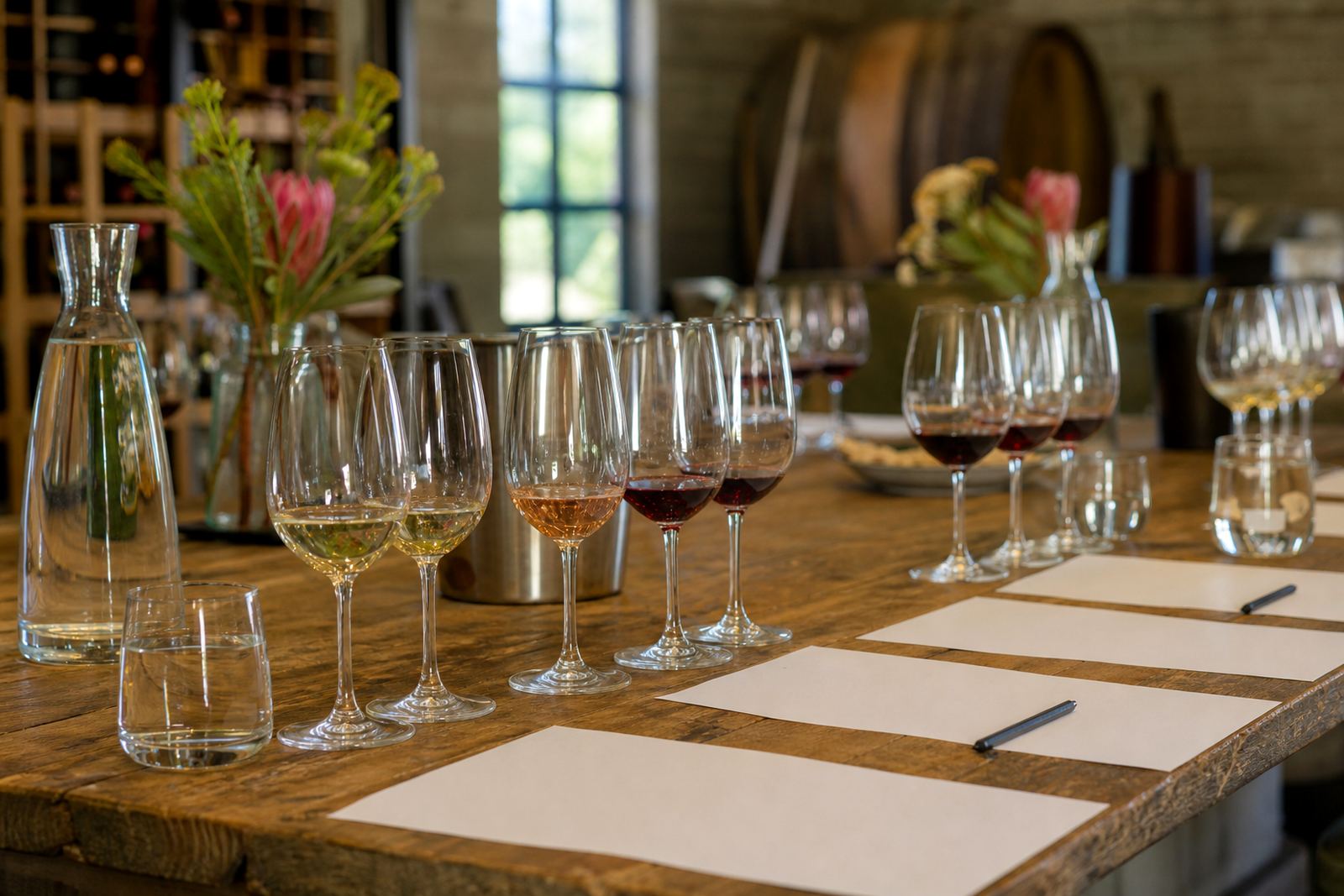
A useful order is bubbly first, then a fresh cheese, then a firmer cheese, and only after that the bolder cheeses. If you are including more than one wine, offer water and plain crackers in between. That helps people reset their taste buds and avoid the common mistake of tasting everything at once.
- Begin with sparkling wine and the mildest cheese
- Move to a white wine with the firmer cheese
- Try a red or richer wine with the strongest cheese
- Finish with fruit or a small sweet bite
A Franschhoek example you can copy at home
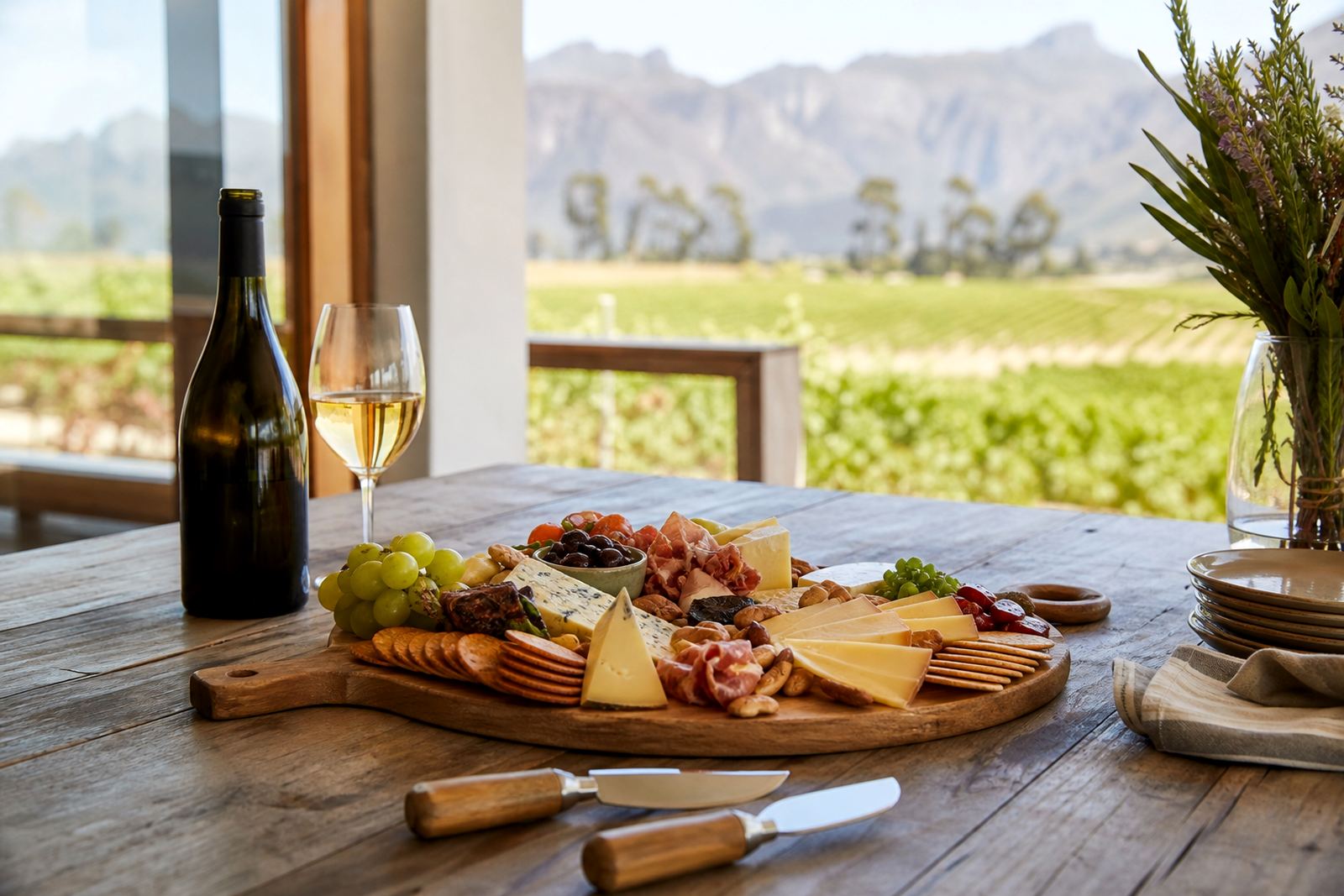
Here is a straightforward board for six people at a Friday evening gathering in Franschhoek village. Use one soft cheese, one semi-hard cheese and one blue cheese. Add grapes, sliced pear, a handful of roasted almonds and two types of crackers. Keep a small bowl of honey on the side and place the cheeses with enough space between them so nothing runs together.
Set the board near the bottle opener, water glasses and napkins, then let guests serve themselves in small portions. That gives everyone a chance to taste and talk without the board disappearing in the first ten minutes. It also makes the evening feel relaxed, which is often the point of a good home tasting anyway.
If you want the board to feel a little more polished, use a wooden platter, a clean tea towel underneath and a separate knife for each cheese. It is a small effort, but it makes the table look cared for. And if the evening turns into a long one, which it often does, you will be glad you kept the setup simple from the start.