Start With a Clear Surface and a Simple Layout
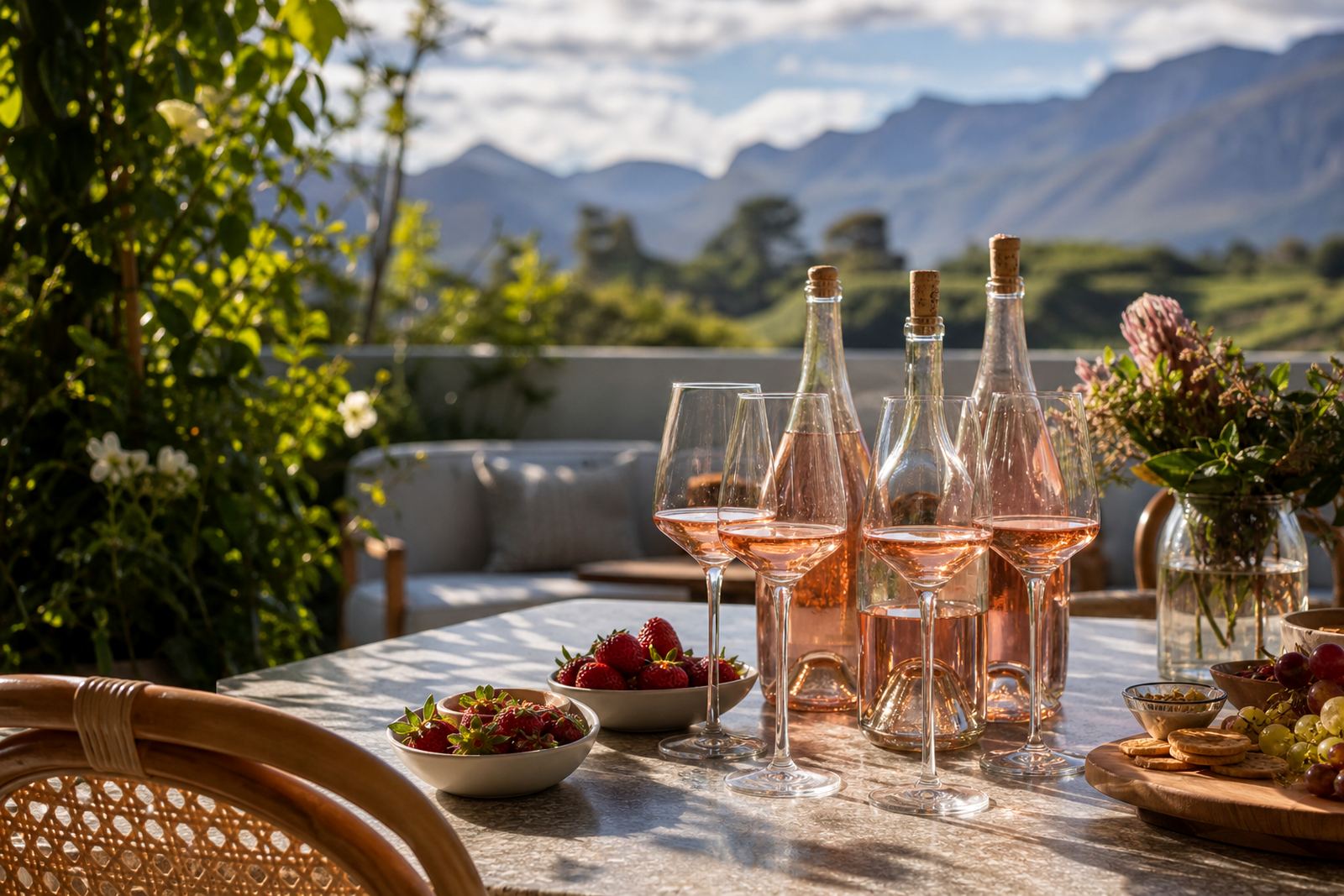
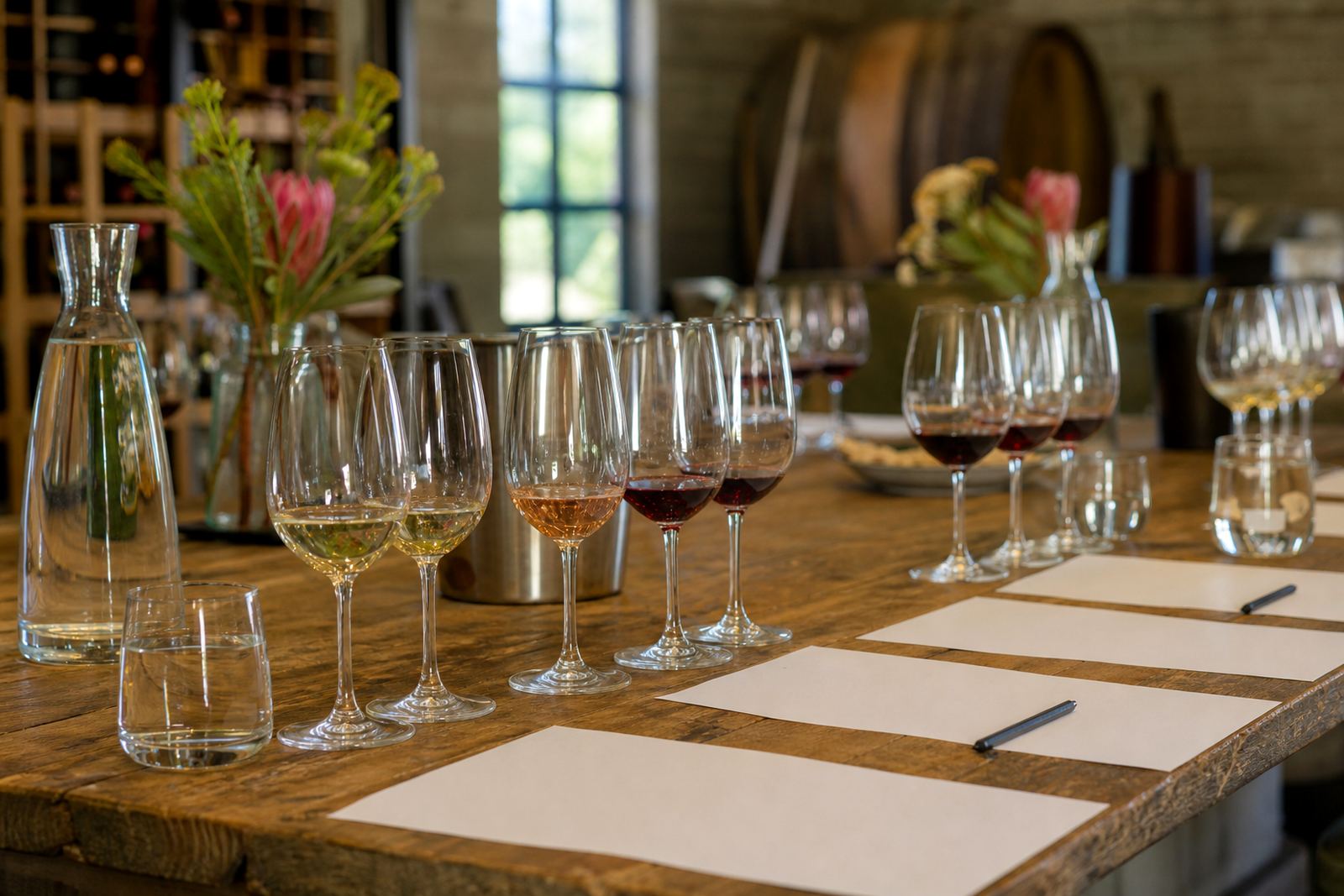
Glassware matters more than many people think. Use clean, odour-free wine glasses or flute-style glasses for sparkling wine, and make sure each guest has the same style of glass if possible. A mismatched set is fine for a casual evening, but it is still worth checking that the glasses are spotless and dry. Any detergent smell or water marks can distract from the wine.
For chilled bubbly, keep an ice bucket or wine cooler close by with enough ice and a little water to cover the bottle shoulders. In coastal areas like Durban and Somerset West, humidity can make a table feel sticky fast, so keep a soft cloth nearby for drips. In hotter inland areas such as Johannesburg, it is worth chilling the glasses for a few minutes before service if the room is warm.
Use small plates or trays for each guest if you are serving several wines. That gives people a place for bread, crackers or a spittoon if needed, and it keeps the table from becoming a mess half way through the first flight.
- Rinse glasses with plain water if they have been stored in a cupboard for a long time.
- Do not fill glasses more than a third for still wine, and less for bubbly.
- Keep one spare glass or two aside in case of breakage.
Choose Snacks That Support the Wines
The food on a tasting table should support the wine, not fight it. Keep the snacks plain, fresh and easy to eat between pours. Think neutral crackers, sliced baguette, mild cheese, unsalted nuts and a few pieces of fruit. If you want to add something local, biltong can work well in the right setting, but keep the seasoning modest so it does not overpower lighter wines.
For a bubbly evening, salty snacks are often useful because they sharpen the palate. For red wines, avoid anything too spicy or heavily sauced. If you are hosting in Franschhoek, Stellenbosch or Paarl, you may want to include a small cheese selection from a local deli or farm shop, but keep the portions neat and easy to handle. A tasting table should feel inviting, not like a full meal that needs cutlery and constant clearing.
- Stick to 3 to 5 snack options only.
- Label anything with nuts, dairy or gluten if guests are not close friends.
- Use small serving bowls so crumbs do not spread across the table.
- Keep strong-flavoured foods such as olives, pickles and chilli on a separate side plate.
Water, Spittoons and Tasting Notes Keep It Practical
A clean tasting station is not only about looks, it is also about making the evening comfortable and responsible. Water should always be available, preferably in still jugs with a few glasses placed at both ends of the table. If you are tasting several wines, set out a simple spittoon or a small jug for leftovers. That keeps the table neat and helps guests taste properly without rushing.
Tasting notes can be as simple as a notepad and pen at each place setting. Some hosts use printed cards with basic prompts such as colour, nose, taste and finish. That works well for beginners and for mixed groups where not everyone knows the wine terms. It also gives the evening a structure, which matters when guests arrive at different times or the tasting becomes chatty, which it often does.
In a home setup, a little order goes a long way. It is much easier to enjoy the wines when nobody is hunting for a pen or asking where the water went. That may sound small, but small details make the whole event feel calmer.
Set the Room for Comfort, Not Ceremony
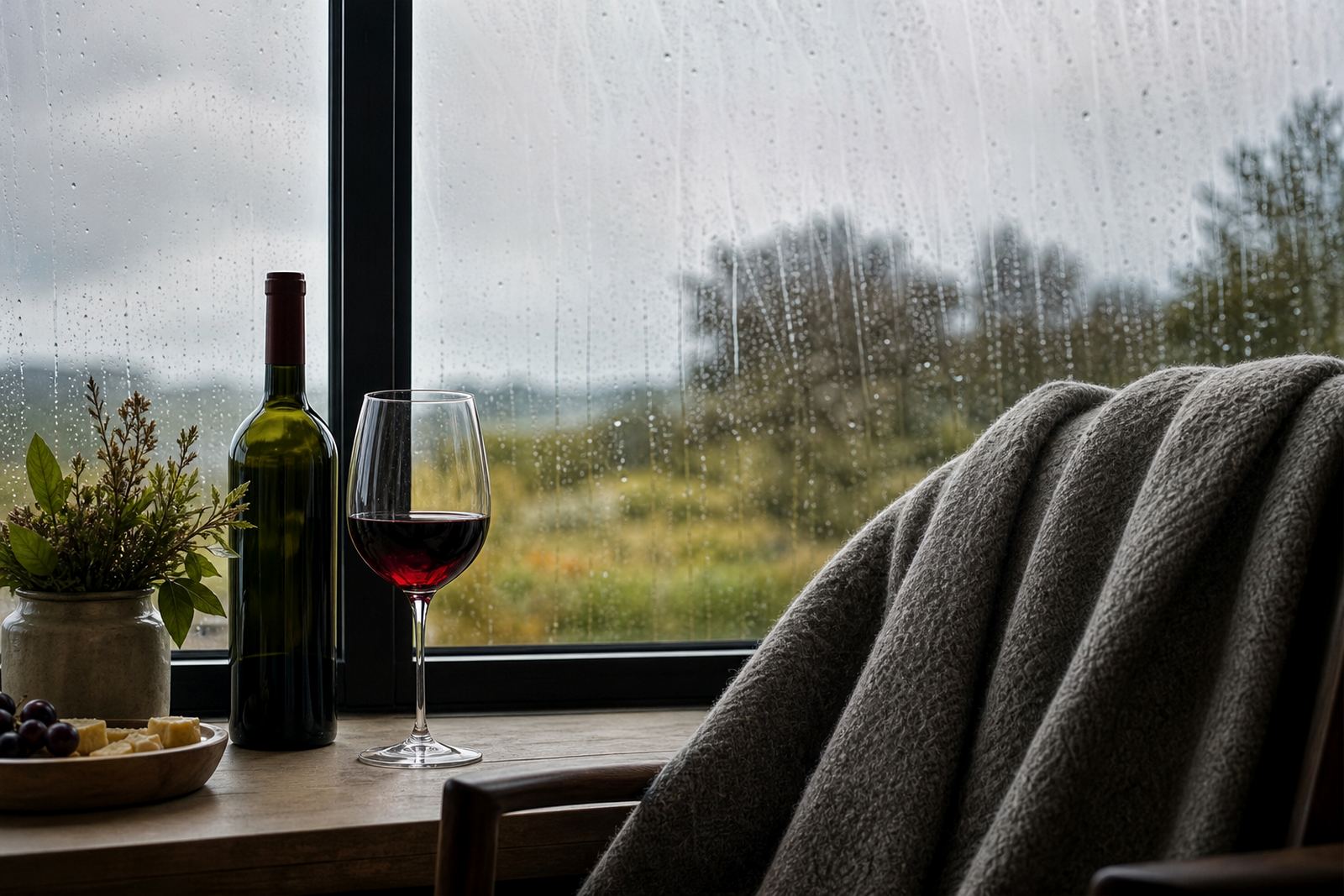
Good lighting, a manageable room temperature and sensible seating can make a big difference. Aim for soft, even light so guests can see the wine colour without squinting, and avoid strong overhead glare if you can. If the room is warm, open a window or use a fan away from the table so the air stays moving. In winter, make sure the space is not too cold, because wine opens up better when people are comfortable.
Seating should allow guests to lean in, taste and talk without being cramped. Chairs with backs are better than standing around the table for long periods. If you are hosting a birthday tasting or a small corporate evening at home, arrange the room so people can move between the tasting area and a relaxed sitting area once the formal part is done.
Music is optional and should stay low. Avoid anything so loud that people cannot discuss the wine. A good tasting table feels social, but not noisy. It should help the conversation rather than take over it.
A Franschhoek Example You Can Copy at Home
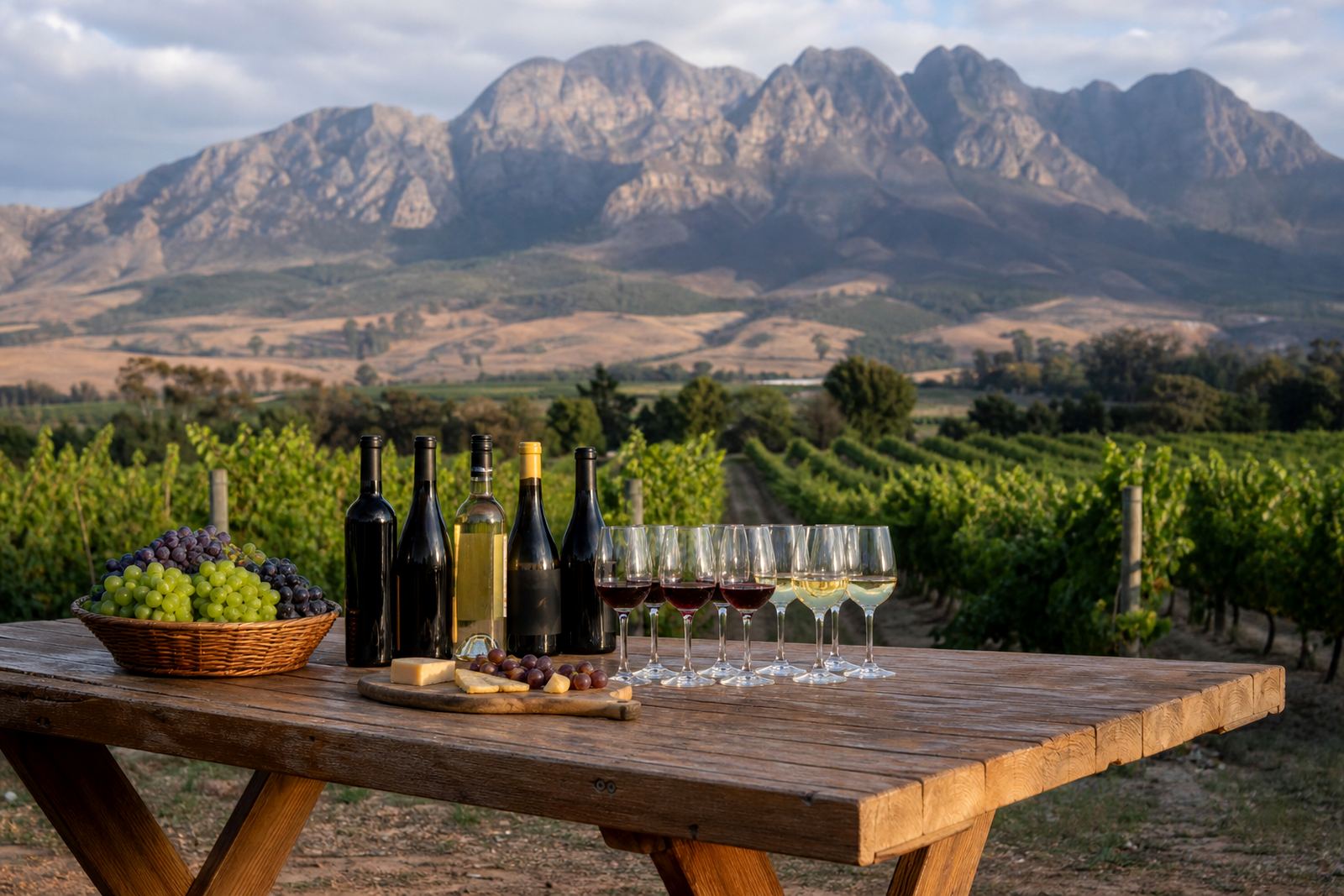
For a simple Franschhoek-style setup, imagine six guests around a wooden dining table on a Friday evening. The host places three wines and one bubbly in serving order, with glasses lined up ahead of time, water on one side and crackers on the other. A small bucket keeps the bubbly cold, while a notepad at each place gives everyone a way to jot down thoughts. Nothing is overdone, but everything has a place.
This kind of setup works just as well in a townhouse in Cape Town, a family home in Constantia or a flat in Durban. The principle stays the same: keep it neat, keep it usable and make sure the tasting is the main event. If you are planning a club night, a private home tasting or a celebration with friends, a tidy table helps the wines do the talking. The rest is just good hosting, and perhaps a decent bottle opener too.
- Plan the order of wines before guests arrive.
- Put glasses out in advance so the first pour is not delayed.
- Check bottle temperatures before seating everyone.
- Have a bin or tray close by for foil, corks and napkins.