
Start with what you already enjoy
The fastest way to build tasting confidence is to begin with familiar flavours. Think about whether you prefer fresh citrus, ripe peach, red berries, soft spice or a clean dry finish. When you know the flavour family you tend to enjoy, it becomes easier to choose wines that suit your taste instead of guessing your way through a bottle shop or tasting tray.
At a club evening in Franschhoek, a new member may arrive saying they like sweet drinks but are unsure about dry wine. Once they try a lightly sparkling option next to a crisp white and a fruit-driven rosé, the picture usually changes. The goal is not to prove anything. It is to notice what feels pleasant, what feels too sharp, and what you would happily pour a second glass of.
- Choose one style at a time, such as white, rosé, red or bubbly.
- Start with smaller pours so your palate stays fresh.
- Ask yourself one question only: would I order this again?
Use three simple notes at every tasting
You do not need a long tasting vocabulary to make good choices. A short note system works better for most people, especially when you are comparing several wines at a tasting evening or working through a monthly subscription box at home. Keep it simple and write down three things: smell, taste and finish.
For smell, notice if the wine reminds you of fruit, flowers, toast or something savoury. For taste, think about whether it feels light, medium or full on the palate. For finish, ask how long the flavour stays after you swallow. This small routine helps you remember what matters to you, even if the labels are similar or the names are hard to pronounce.
- Smell: fresh, floral, fruity or toasty.
- Taste: light, medium, full, sweet or dry.
- Finish: short, medium or long.
After two or three tastings you will start spotting patterns. Maybe you enjoy wines with bright acidity but not too much oak. Or maybe you prefer bubblies with a dry finish and fine bubbles rather than richer styles. Those notes become a useful guide for future choices.
Learn the difference between taste and texture
Many new drinkers think they do not like a wine because it tastes strong, when in fact it is the texture or acidity that feels unfamiliar. Taste is only part of the story. A wine can be fruity yet still feel lean, creamy, sharp or drying. Once you separate flavour from texture, your confidence grows quickly.
A practical example: a Chenin Blanc from the Western Cape may taste of yellow apple and pear, but the acidity gives it a crisp edge. A sparkling wine might feel lively and refreshing because of the bubbles, even if the fruit is delicate. A young red may have black fruit flavour but firm tannins that feel a little grippy on the tongue. Learning these differences helps you say exactly what suits you, not just what you liked or disliked.
- Flavour is what you taste, such as apple, plum or citrus.
- Acidity is the fresh, mouth-watering feeling.
- Tannin is the drying feel often found in red wine.
- Body is the weight of the wine on your palate.
Let food do some of the work
Food pairing can make tasting feel less intimidating because the right bite softens the edges and brings out the best in the glass. You do not need a full dinner to test this. A few simple snacks are enough to show how wine changes with salt, cream, spice or sweetness. It also makes a tasting evening more social and less formal, which helps new drinkers relax.
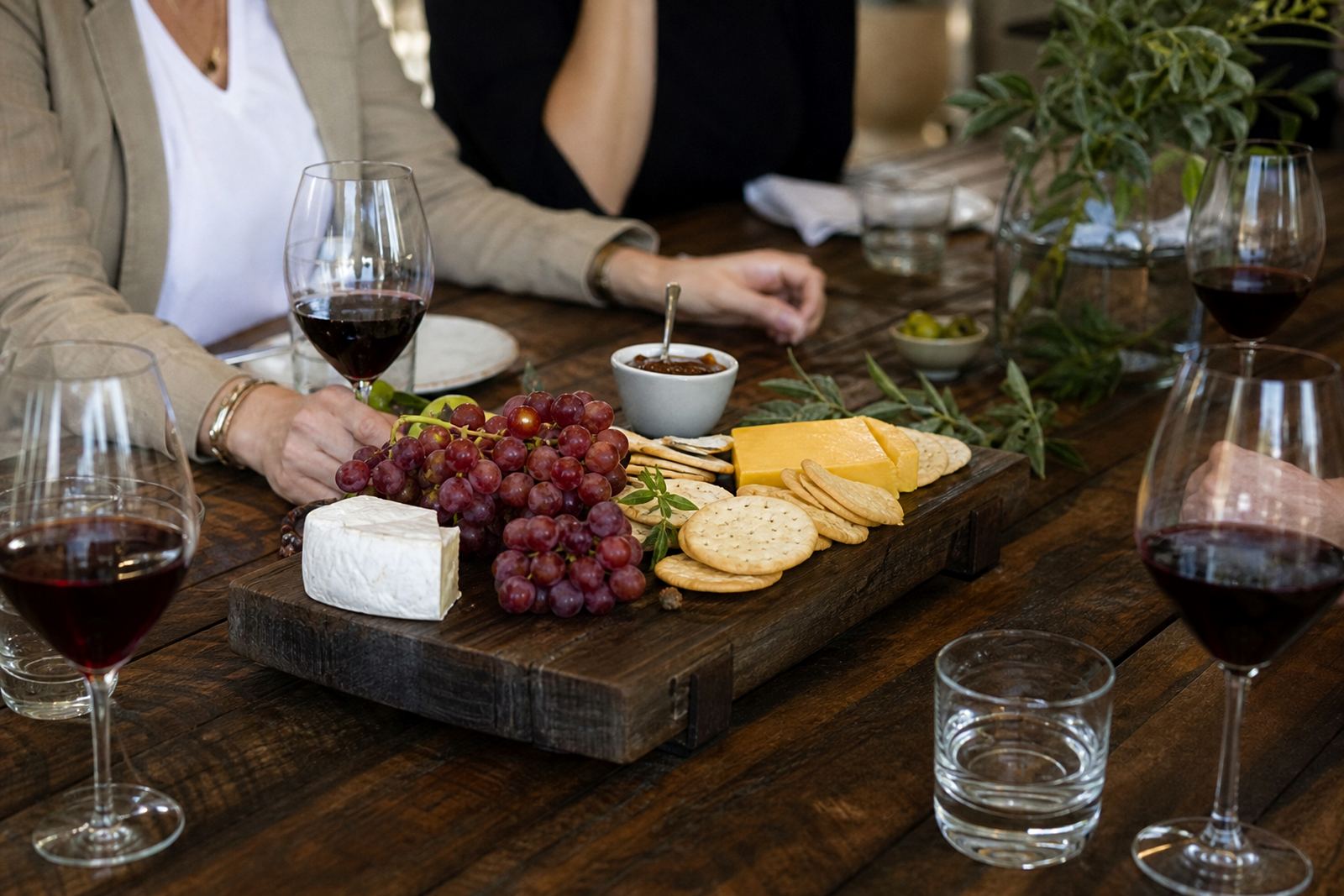
In Cape Town or Durban, where many people enjoy tastings after work, a small plate of biltong, mild cheese, olives or roast chicken can be enough to show how different wines behave. A crisp white may taste brighter next to salty snacks, while a bubbly can feel even cleaner with fried food. If you are unsure where to begin, pairing is a practical way to narrow down your preference without overthinking it.
- Salt can make wine taste fruitier.
- Spice can make high alcohol feel hotter.
- Creamy food can soften sharp acidity.
- Sweet food can make dry wine taste more bitter.
Use the setting to your advantage
Confidence is not only about the wine in the glass. The setting matters too. A tasting at home on a quiet Thursday evening feels different from a lively club event with a crowd. Both can be useful. One gives you time to concentrate, the other helps you hear how other people describe the same wine. If you are new, try both so you can learn in different ways.
At a tasting evening in Stellenbosch or Johannesburg, people often relax once they realise nobody expects perfect answers. That is usually when the better questions start. What do you notice first? Is the wine more fruity or more savoury? Does it feel smoother with food? These are practical questions, and they help you build confidence quicker than repeating technical terms you may not use again.
If load-shedding or a warm evening is part of the picture, keep white wine and bubbly properly chilled before you start. Serving temperature changes what you taste. A warm sparkling wine can lose freshness fast, while a red served too hot can feel heavier than it really is.
Keep a personal shortlist and trust it
After a few tastings, start building a shortlist of styles you enjoy. This can be as simple as a note on your phone or a page in a notebook. List the grape type, the region, the occasion and a short reason why you liked it. Over time, this becomes far more useful than trying to remember a bottle name from memory.
A new member in Paarl might discover that they prefer sparkling wines for celebrations, a dry rosé for summer braais, and a medium-bodied red for winter dinners. Another person in Somerset West may find that they enjoy softer whites and avoid heavily oaked styles. Neither answer is better than the other. The point is to know your own pattern and buy with more certainty.
- Write down what you liked and why.
- Note the occasion, such as a birthday, dinner or casual Friday.
- Keep one or two favourites ready for future entertaining.
Once you know your shortlist, shopping becomes easier and tastings feel less like a test. You can join a club evening, try a monthly box at home or plan a private tasting with more confidence because you already have a sense of your own taste.
Build confidence one glass at a time
There is no rush to become an expert. Most people build confidence by tasting steadily, paying attention and repeating a few simple habits. Start with familiar flavours, use short notes, compare texture, try food pairings and keep a personal shortlist. That small routine is enough to turn uncertainty into a clear sense of what you enjoy.
For new drinkers in Franschhoek and beyond, a friendly tasting club can make the process easier and more enjoyable. Monthly boxes and guided tasting evenings give you a practical way to learn without pressure. The more you taste with purpose, the faster your own preferences come into focus and the less you rely on other peoples opinions. And yes, that makes choosing a bottle for a dinner or gift much easier.