
Why cheese changes the way red wine tastes
Cheese can soften tannins, lift fruit and make a wine taste rounder than it does on its own. That is why a red that feels firm in the glass can seem smoother beside a slice of cheddar or a wedge of hard sheep's milk cheese. Salt, fat and texture all matter, so the same wine may work beautifully with one cheese and not another.
In South Africa, many red wines carry ripe fruit, moderate oak and enough freshness for food. That makes them handy with local cheese boards, whether you are serving a Friday night platter in Franschhoek or putting together a family spread for a birthday in Durban. The trick is not to overpower either side.
Soft cheeses need lighter reds, not heavy tannins
Soft cheeses such as brie, camembert and fresh goat's cheese can be tricky with very bold reds. Strong tannin can make the cheese taste metallic and dry. Better choices are lighter red wines with bright fruit, moderate alcohol and softer structure.
- Pinotage with a lighter hand, especially if it shows red cherry rather than heavy oak
- Grenache-based reds with spice and soft tannin
- Young Cabernet Franc with herbal notes and freshness
If the cheese is creamy and mild, serve the wine slightly cool at about 14 to 16 degrees C. That keeps the fruit lively and stops the pairing from feeling heavy. A small sourdough loaf or oat crackers help too, especially when the cheese is rich.
Mature cheddar and other hard cheeses can handle more structure
Aged cheddar, mature gouda, pecorino-style hard cheese and parmesan all bring salt and umami. These flavours can stand up to more structured reds, including wines with firmer tannins and deeper fruit. The salt in the cheese helps soften the grip of the wine, while the wine brings sweetness and depth back to the palate.
For this style of board, South African reds with black fruit, spice and a bit of oak often work well. Think of wines with enough backbone to meet the cheese without flattening it. If the cheddar has been aged for a long time, a wine with more body will usually give a better result than a light, delicate red.
- Cabernet Sauvignon with blackcurrant and cedar
- Shiraz or Syrah with pepper, plum and savoury notes
- Merlot blends with smooth fruit and enough weight
Blue cheese needs sweet fruit and careful serving
Blue cheese is the one that often divides a table. Its salt, sharpness and creamy bite can overwhelm a dry red unless there is enough fruit and softness in the glass. With strong blue cheese, the best pairing is often a red that is ripe, plush and not too tannic. If the wine is too lean, the blue will dominate.
Try a fuller red with ripe berry fruit and gentle tannins. A wine with a touch of sweetness in the fruit profile can help. Serve the blue in small portions, because a little goes a long way. On a warm summer evening in Stellenbosch, this kind of pairing works best if the cheese comes out of the fridge early so the texture is less hard and the flavours open up properly.
A South African cheese board that works in real life
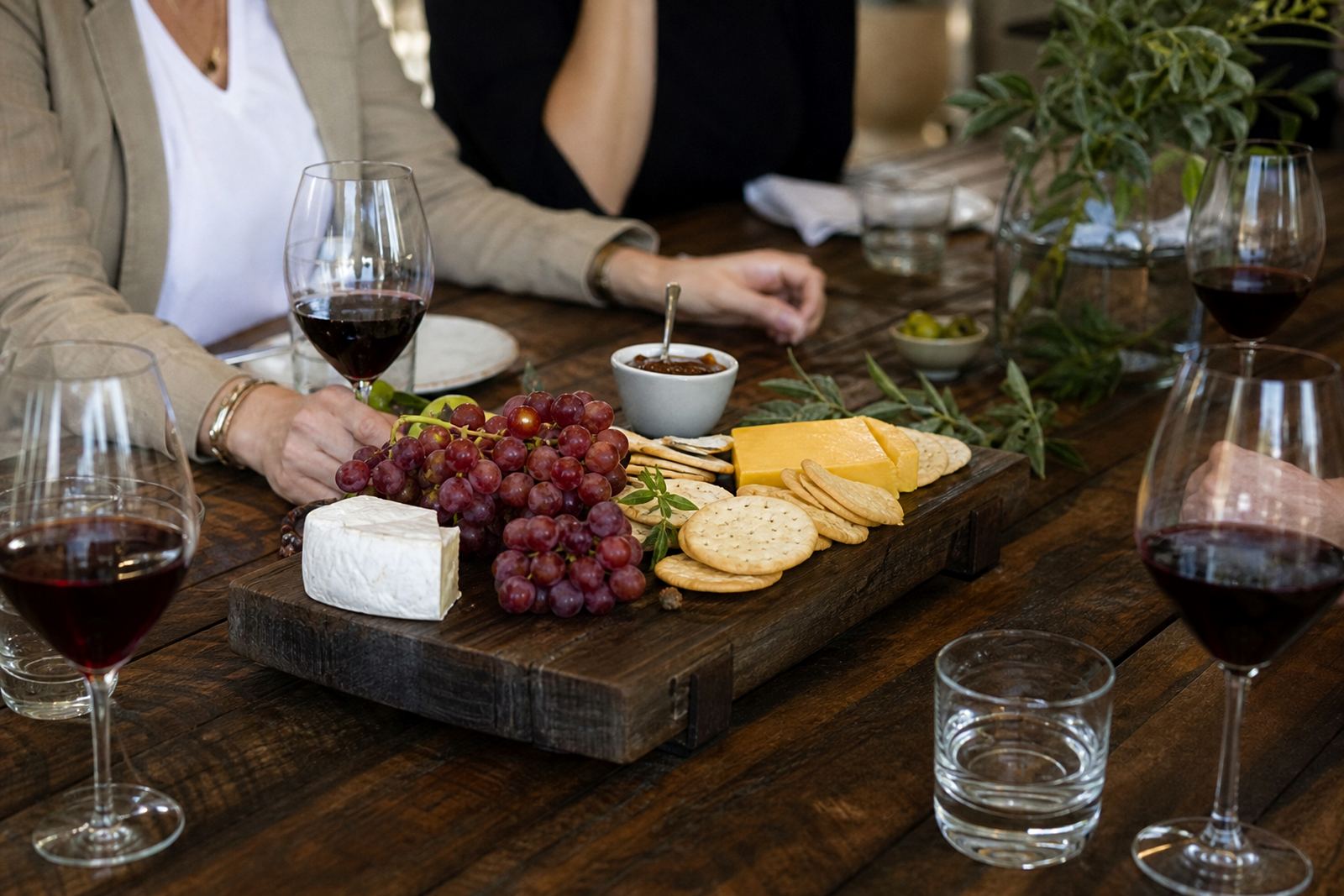
If you want a board that suits a mixed group, build it from mild to strong and pour the wines the same way. Start with a soft cheese, move to a hard cheese, then finish with blue. This keeps the tasting easy to follow and avoids the stronger flavours taking over too early.
Here is a simple local combination that works well for a group of six to eight people:
- Fresh goat's cheese with a light red blend
- Mature cheddar with Cabernet Sauvignon or Shiraz
- Blue cheese with a ripe, softer red blend
- Dried apricots, figs, salted almonds and plain crackers on the side
If you are serving in a coastal home in Cape Town or Durban, keep the cheese covered until just before guests arrive. Humidity can soften the board too quickly. In hotter months, a chilled serving platter helps and saves a bit of stress during load-shedding too.
How to host a tasting without making it complicated
You do not need a long list of rules to host a good cheese and red wine evening. What matters most is serving the wines in the right order and keeping the portions modest. Two or three cheeses are usually enough, especially if you want guests to notice the differences instead of filling up too fast.
Use small pours, about 75 ml each, and cut the cheese into manageable pieces so everyone can taste the same bite. Keep water on the table and plain bread nearby. That gives the palate a reset point between wines, which is especially useful if one bottle is more tannic than expected. A simple tasting note card also helps guests remember what they liked, rather than trying to recall it later over dessert.
If you are planning a birthday, corporate event or a private home tasting, cheese and red wine makes a practical theme because it is familiar but still interesting. It suits a relaxed evening in Franschhoek, a team gathering in Johannesburg or a small group tasting in Paarl without needing complicated food service.