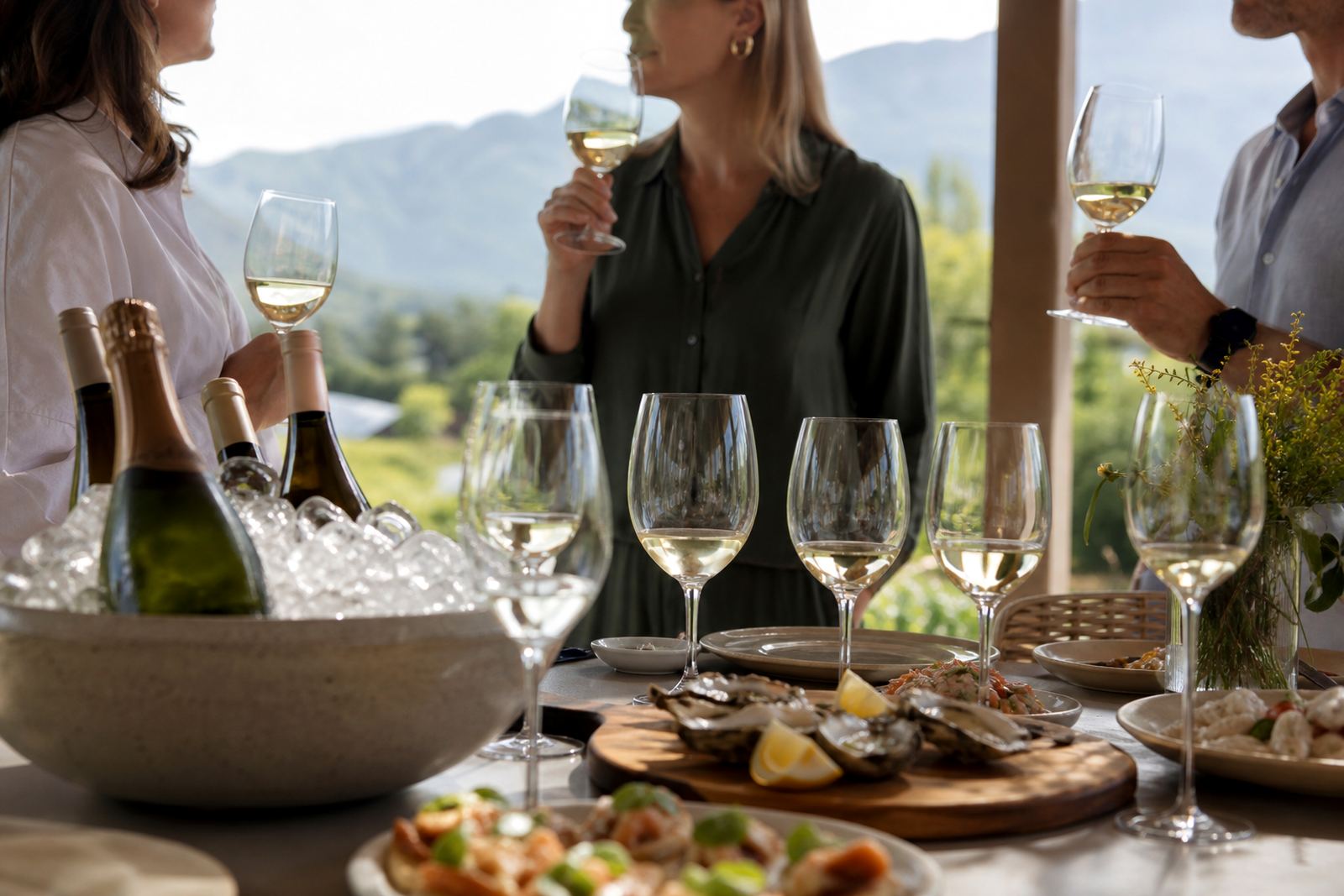
What white wine fans usually want from a tasting
White wine drinkers often look for brightness first: citrus, green apple, pear, white flowers and a clean finish that does not feel heavy in the glass. That makes the planning different from a red wine evening. You need proper chilling, enough glassware for a chilled pour, and a setup that keeps bottles cold from the first glass to the last.
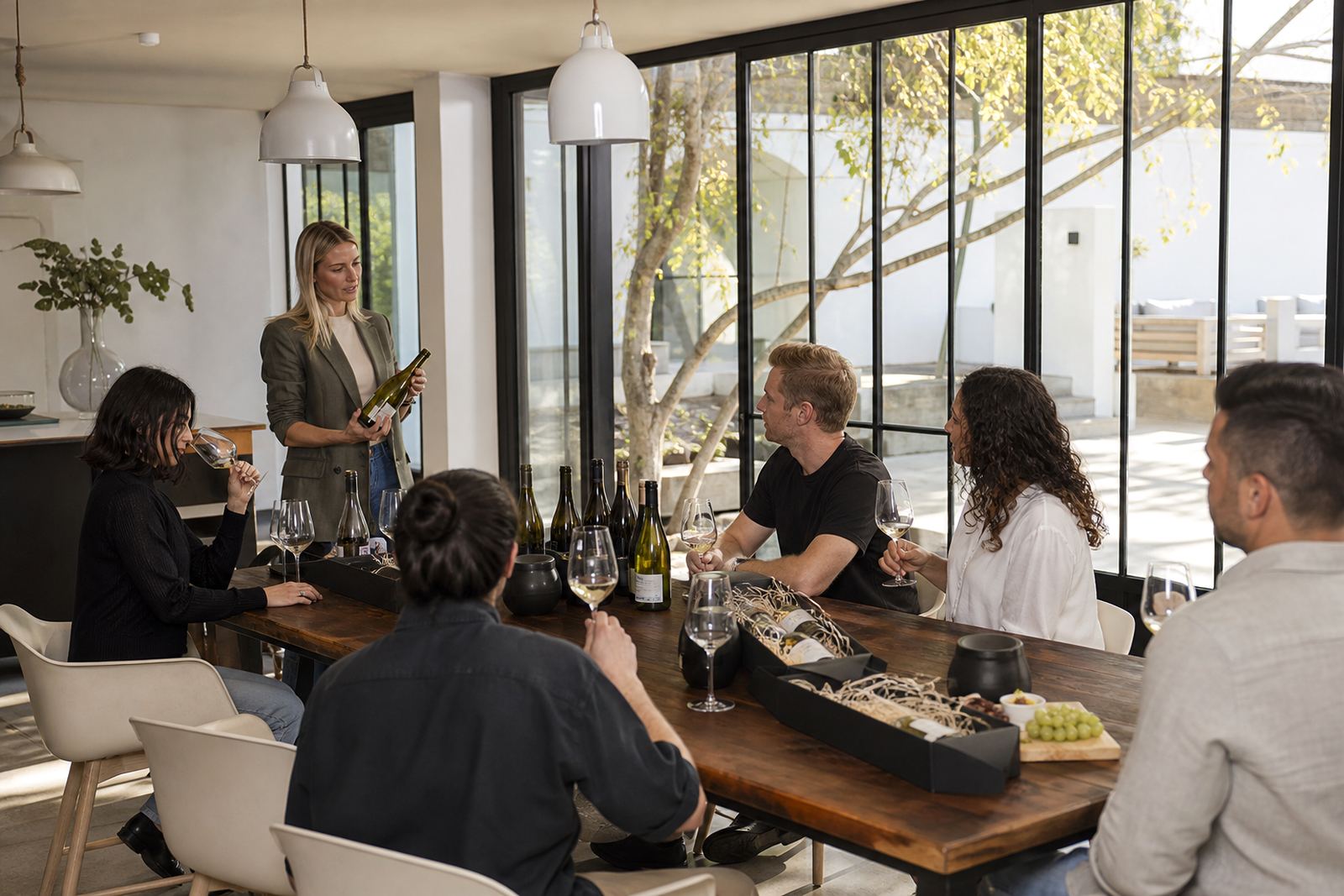
For a private home tasting in Franschhoek, Stellenbosch, Cape Town or Somerset West, the usual brief is simple. People want to compare styles side by side, learn which grapes suit their palate and enjoy a relaxed evening without too much fuss. In Durban or coastal areas, humidity and warmer evenings mean chilled service matters even more, so the timing and cold storage need a bit more attention.
- Best suited to Sauvignon Blanc, Chenin Blanc, Chardonnay, Semillon and crisp sparkling styles
- Works well for 4 to 20 guests at home, or 20 to 80 guests for a corporate setting
- Ideal for early evening tastings before a dinner, or as a separate social event
A practical set-up for crisp whites and bubbly
A white wine tasting does not need a large amount of equipment, but the few pieces you do use must be right. If the bottles warm up too quickly, the tasting loses its shape. If the glasses are too big or too warm, delicate aromas disappear. The aim is to keep the whites fresh, clean and easy to compare.
At a minimum, plan for tulip shaped wine glasses, ice buckets or chilled tubs, a table with enough space for bottles and tasting sheets, and water for rinsing palates between pours. For bubbly evenings, narrow flutes or small tasting glasses help hold the sparkle better. A small fridge or cooler with ice packs is useful for load-shedding days and for venues where the kitchen is busy.
- Glassware: 1 glass per person, plus spare glasses for compare and contrast flights
- Temperature control: 6 to 10 degrees for most whites, slightly cooler for bubbly
- Useful extras: ice buckets, water jugs, spit cups, tasting mats and a simple decanter for fuller whites
How to plan the layout so the tasting flows well
White wine tastings work best when guests move in a steady order, from light and zesty styles to fuller wines. Start with sparkling or the lightest white, then move through fresh and aromatic bottles, and finish with richer styles or oak touched wines. This keeps the palate from feeling tired too early.
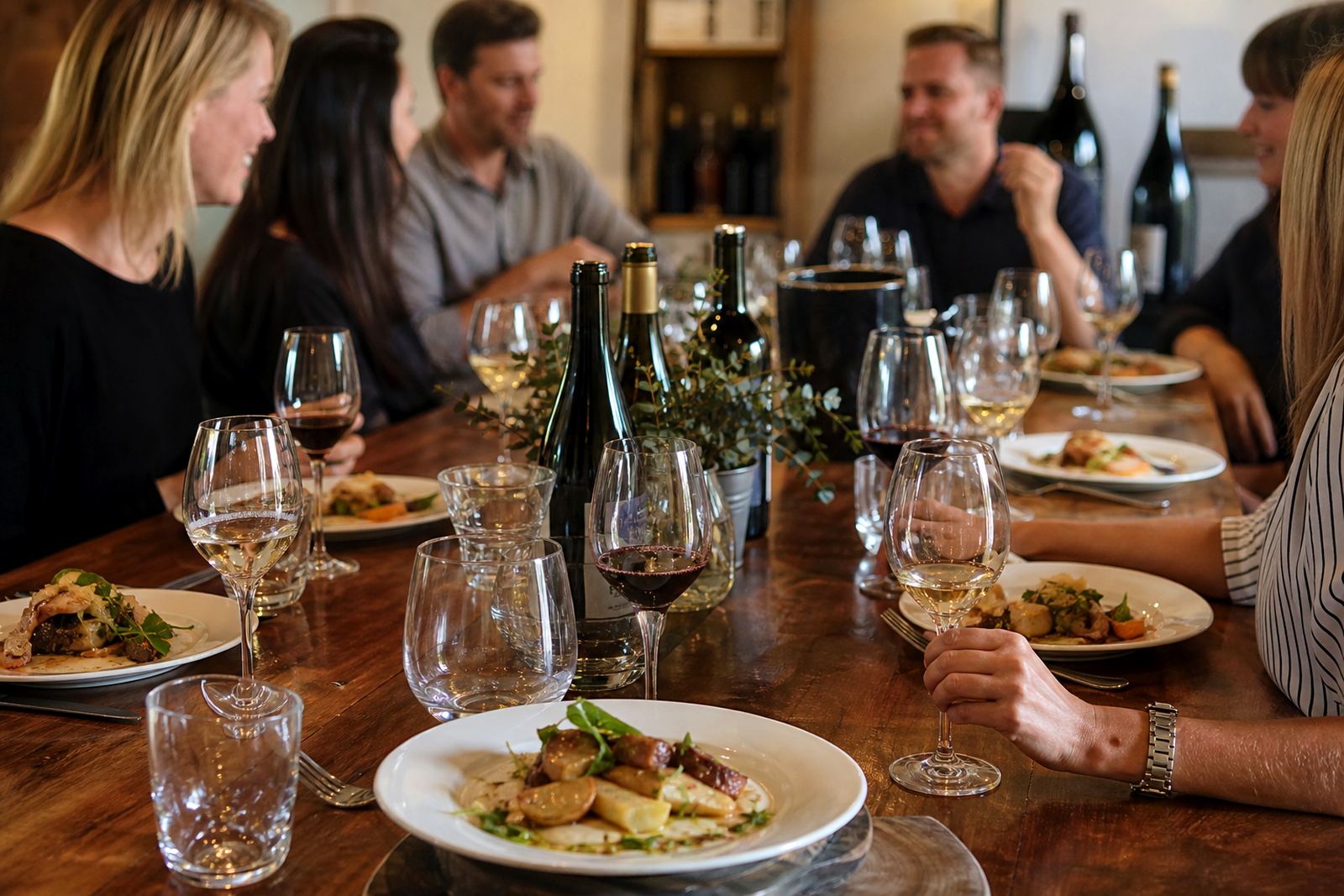
For a home event, a dining table or long counter is usually enough. Leave space between tasting stations so guests are not bumping elbows, and keep the food at the far end of the table rather than next to the bottles. If you are hosting a team evening in Johannesburg or Cape Town, allow for a small welcome area where coats, bags and name cards can be managed before the first pour.
- Place water at every station, not just one end of the room
- Use labels or numbered cards so guests can compare wines without confusion
- Keep snacks plain at first, then add food pairing bites after the first few pours
Common mistakes with white wine events
The biggest mistake is serving whites too warm. Even a good bottle can seem flat if it has stood on a counter too long. Another common problem is overloading the table with food that fights the wine. Strong chilli, vinegar heavy sauces and very sweet desserts can drown out the freshness people came for.
People also forget that white wine can show faults quickly if handled badly. A bottle left in direct sun on a stoep in Paarl or Constantia will not taste the same as one that stayed chilled. And at indoor venues, especially during summer or when the aircon is fighting the heat, you need backup cooling so the last glasses are as lively as the first ones. Small typo in planning can turn into a flat tasting, so do the temperature check early.
- Do not serve all the wines at once and hope guests remember the differences
- Do not pair every wine with strong flavoured food from the start
- Do not leave bubbly open while guests are still arriving
Budget ranges for private and corporate white wine tastings
Budgets vary with guest numbers, the number of wines, glassware requirements and whether the event is at home, in a venue or online. For a simple private tasting in South Africa, a modest home setup can start around R1 500 to R3 500 for snacks, basic cooling and printed tasting sheets, if the wine itself is already supplied. For a more polished private evening with guided tasting materials, pairings and delivery support, many hosts plan between R4 500 and R9 000.
Corporate functions, birthday evenings and engagement bubbly events usually need a larger budget because of staffing, setup and transport across towns like Franschhoek, Stellenbosch, Durban and Johannesburg. A small group event can sit around R6 000 to R12 000, while bigger hosted tastings with food pairings or a full team evening can move into the R15 000 to R35 000 range. For virtual group tastings, you save on venue costs but still need delivery, chilled packing and a clear courier plan.
Ching Ching Cellar keeps the process practical for white wine fans who want good variety without turning it into a complicated production. Monthly subscription boxes are useful for regular drinkers who want a fresh selection each month, while tasting evenings suit groups that want a bit more guidance and conversation around the glass.
Why white wine fans keep coming back to the club
White wine lovers often enjoy the sense of discovery. One month it may be a zippy coastal Sauvignon Blanc, the next a softer Chenin with stone fruit, or a sparkling bottle that works well for a celebration. That variation keeps the club interesting without needing heavy tasting notes or fancy jargon.
With a Franschhoek village base and events across Cape Town, Stellenbosch, Johannesburg and Durban, the club is set up for people who want both convenience and proper local knowledge. The team handles the details, from selection to delivery planning and guest experience, so the evening feels organised but still relaxed. It suits couples, friend groups, workplaces and anyone who would rather taste than stress over the setup.
- Good for monthly discovery boxes and one-off tasting events
- Suitable for beginner drinkers as well as seasoned white wine fans
- Works for private homes, corporate spaces and seasonal celebrations