
When the tasting table matters as much as the wine
Social Tasters usually come to us when the group is already chatty, already curious, and wants more than a standard drink-and-run function. It might be a birthday in Cape Town, a staff evening in Stellenbosch, a bridal gathering in Franschhoek, or a corporate team in Johannesburg that wants something more relaxed than a formal dinner. The aim is simple: good wines, a clear flow, and enough structure so people feel involved without turning the evening into a lecture.
For these groups, the best set-up is one that keeps the room moving. People like to compare notes, ask questions, and come back for a second pour. That means short tasting rounds, easy access to water and spit cups, and enough light so colour and bubbles can actually be judged. In humid coastal areas like Durban and Somerset West, we also plan for fast chilling and careful bottle handling so the sparkling wines stay crisp all evening.
The usual tasting kit for a lively group
Most Social Tasters events work best with practical equipment rather than anything fussy. We look at the number of guests, the venue size, and whether the tasting is seated, standing, or mixed. A clean table layout, proper glassware, ice provision and simple tasting notes usually do more for the evening than fancy decor ever will.
- 6 to 8 wines or bubbly options for a standard tasting flight
- Glassware for each guest, plus spare glasses for swaps or breakages
- Ice buckets and chillers for sparkling wine and white wine service
- Water station with still water and rinsing option
- Tasting cards, pens and simple score sheets
- Spittoons or disposable tasting cups for larger groups
- Small plates for palate cleansers or paired snacks
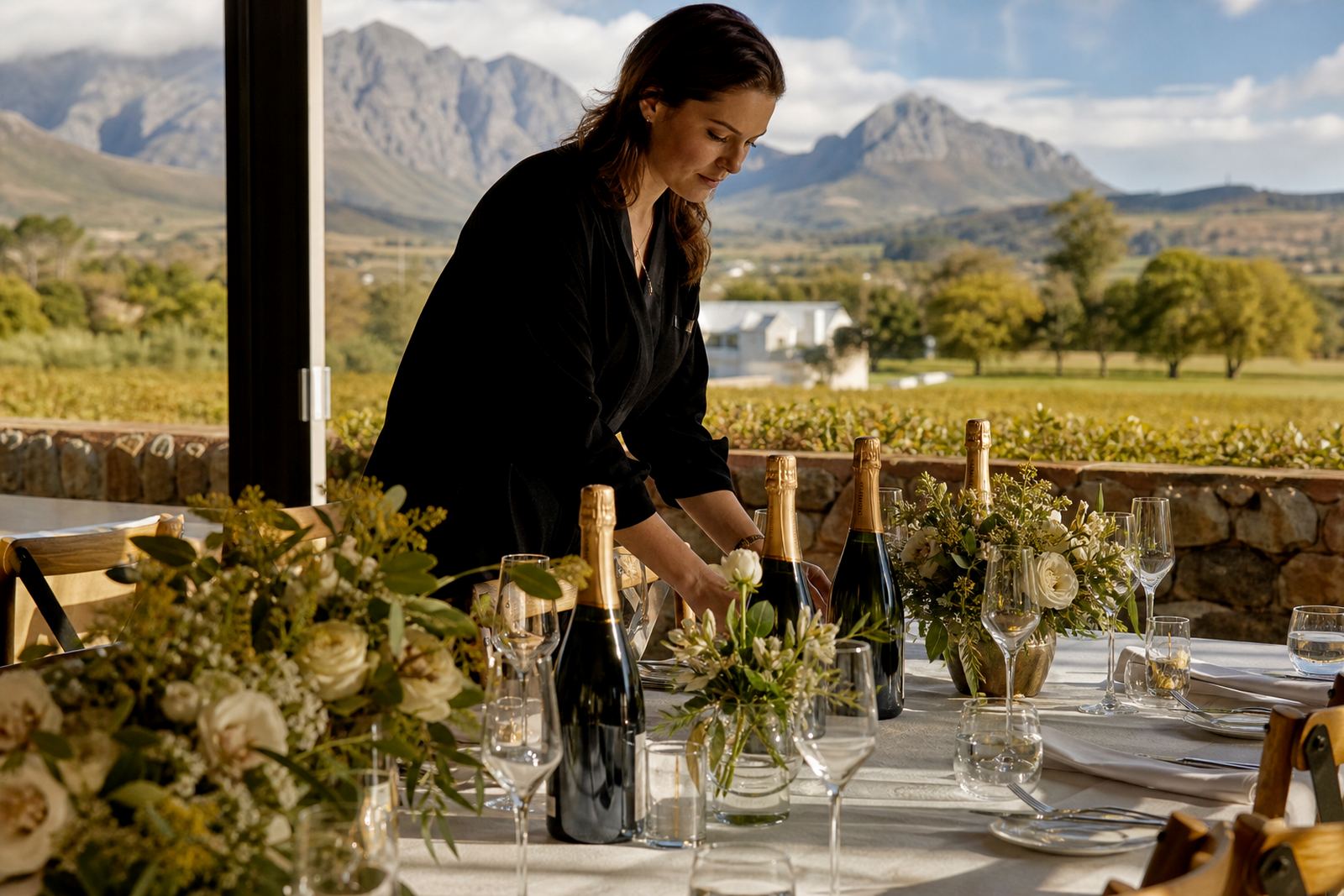
If the event is outdoors in Paarl, Constantia or Franschhoek, we also plan for shade, wind and stable surfaces. A tasting table that wobbles or sits in full afternoon sun is a common mistake and it usually shows up in the first fifteen minutes.
How we plan the room for conversation
The room layout should make it easy for guests to talk to each other and still follow the tasting. Round tables suit social groups, while long tables are better when the host wants everyone to hear the same introduction. For pop-up club events, we often create small tasting stations so people can move around, compare wines and mix with other members. That helps the room feel active without becoming crowded.
In smaller home settings, leave enough space between the tasting area and the food table. If the cheeses, breads and hot dishes sit too close to the pour area, the flow becomes messy very quickly. It is also worth setting the room temperature sensibly. Wine held too warm in a Summer room can lose its structure before the second round even starts.
A good event plan usually includes a welcome pour, a short introduction, then a sequence of tastings with pauses for chat. If the group is outgoing, keep the explanations short and practical. People want to know what they are tasting, where it comes from, and why it tastes the way it does. They do not want a long speech from the host.
What the monthly box gives social members
The monthly subscription box is a useful starting point for Social Tasters because it keeps the group engaged between events. Instead of waiting for the next tasting evening, members can open the box at home, compare notes and bring their impressions to the next club gathering. It works especially well for members in different towns, since deliveries go out across South Africa.
Typical box contents depend on the theme, but often include a mix of local wines and sparkling selections, tasting notes, pairing ideas and a small editorial from the cellar journal. Some months lean towards fresh white wines, others towards cap classique styles, and some are built around a regional story from Franschhoek, Stellenbosch or Paarl.
- Curated South African wine and bubbly selection
- Printed tasting notes with serving guidance
- Pairing ideas for cheese, seafood or light dishes
- Occasional event invites for club members
- Information on grape styles, regions and producers
That mix suits outgoing members because it gives them something to discuss. It also helps hosts avoid repeating the same tasting format every month, which can get stale pretty quickly.
Common mistakes at social tasting events
The biggest error is trying to fit too many wines into one evening. After about eight pours, most guests stop comparing and start guessing. That is not really a tasting anymore. It is better to choose fewer wines and give each one enough time to be noticed.
Another common issue is poor pacing. If all the glasses arrive at once, the room gets noisy and the host loses control of the sequence. If the pours are too slow, people drift off and start filling in the gaps with their own drinks. We normally space tastings so there is a clear rhythm, with time for chat but no long dead spots.
- Serving bubbly too warm or letting ice run out too soon
- Ignoring glass counts for larger groups
- Overloading the table with too much food
- Not providing enough water between pours
- Choosing wines that are too similar for a mixed audience
For coastal events, another mistake is forgetting about humidity and condensation. Wet glasses and damp napkins look untidy and can affect the overall feel of the room. It sounds small but it makes a difference.
What to budget for a social tasting in Rand
Budget depends on guest count, venue, travel and the level of service required. A smaller home tasting for eight to twelve guests can usually be kept in a moderate range if the wine list is straightforward and the service setup is simple. Once you move into corporate entertaining, paired dining or a hosted club event with staff, the spend rises quite a bit.
As a practical guide, many Social Tasters events fall into these bands: R1,500 to R4,500 for a basic intimate setup, R5,000 to R12,000 for a mid-sized hosted evening, and R12,000 plus for larger events with more wines, staffing and food pairing support. Delivery across South Africa, especially to outlying areas, can add to the total depending on timing and quantity. In busy seasons like year-end or harvest time, it is wise to book early because venues and transport fill up fast.
If your group likes regular catch-ups, the monthly box can be a better value than one-off tasting shopping because it spreads the experience over the month and keeps the club active without needing to start from scratch each time.
Best suited to outgoing members and mixed groups
Social Tasters suits members who enjoy meeting new people, comparing wines and making the evening part of the experience. It also works for mixed groups where some guests know a lot about wine and others are still learning. The format allows everyone to join in without pressure. A beginner can ask simple questions and still feel included, while a more experienced taster can enjoy the detail and the discussion.
Ching Ching Cellar keeps the tone local and practical, with South African wines, sparkling beverages and events that feel connected to the people in the room. Whether the gathering is in Franschhoek, Cape Town, Johannesburg or Durban, the focus stays the same: good bottles, easy conversation, and a tasting evening that people want to come back to.