
Start with the steadiest spot in the house
For most homes, the best place for wine is the coolest, quietest corner you can find. A cupboard away from the oven, fridge motor, geyser or washing machine usually works better than a shelf near a sunny window. If your place gets hot in summer, especially in Durban or on the coast, choose the area that stays most even through the day and night.
Wine does not like big swings in temperature. A bottle that sits in a warm kitchen for weeks and then gets chilled hard in the fridge loses consistency, and that is not ideal when you are saving bottles for a tasting evening or a Sunday lunch. Aim for steady, not fancy.
- Keep bottles away from direct sun and bright strip lighting.
- Avoid the top of the fridge, microwave shelf, or a windowsill.
- Choose a place with little foot traffic so bottles are not bumped.
- If you can feel heat from the wall, pick another spot.
Use your space well in flats and compact kitchens
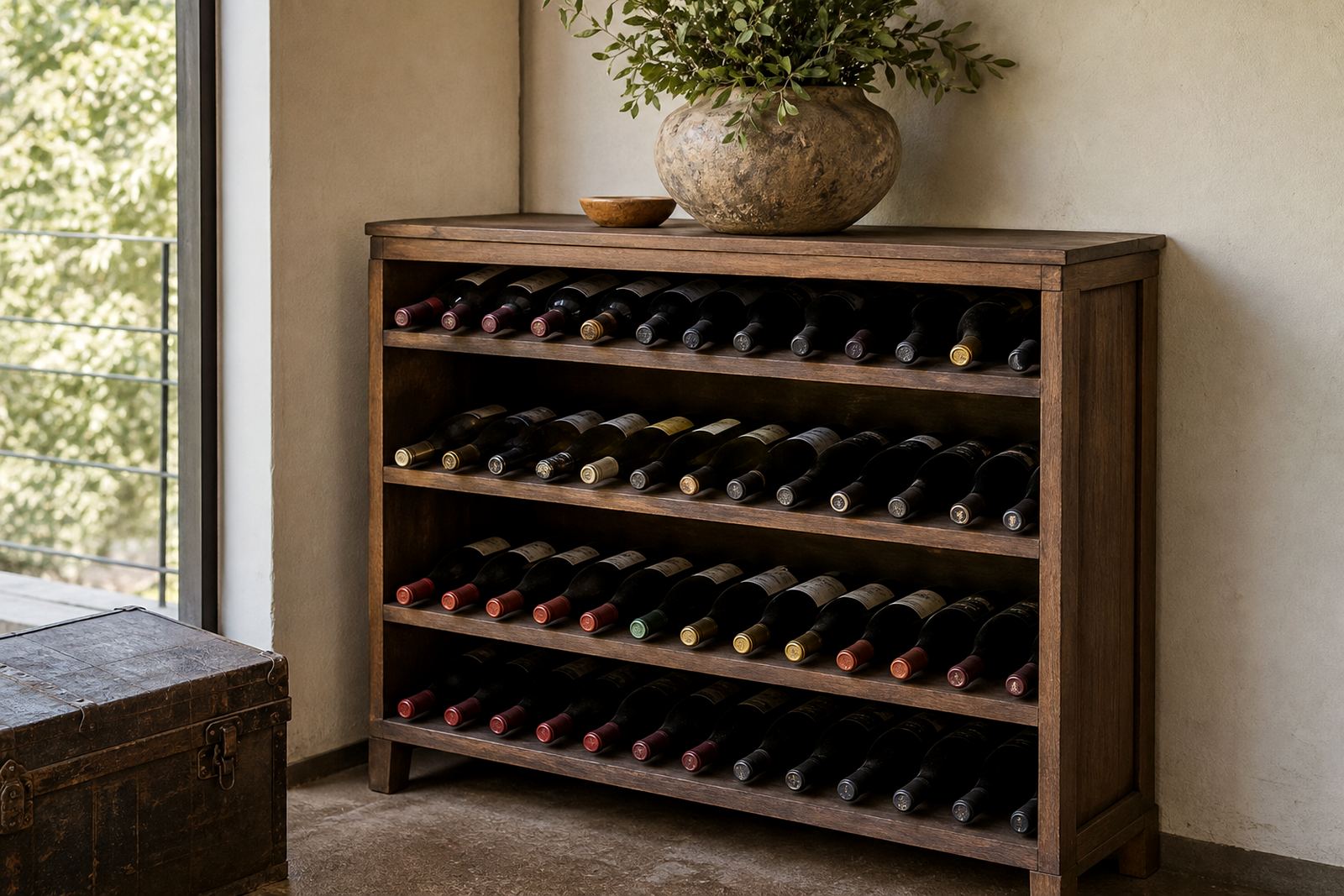
Not every member has a separate cellar, and that is completely fine. In a small flat or townhouse, vertical storage can help. A simple rack inside a cupboard, a narrow undercounter shelf or a covered crate can keep bottles organised without taking over the room. Store them on their side if they have a cork, so the cork stays damp and the seal remains sound.
If you only keep a few bottles at home, use a first in, first out habit. Put new bottles at the back and use the older ones first. That way you are not left with a dusty mix of half forgotten bottles and accidental duplicates, which happens more often than people admit.
- Measure the cupboard before buying a rack, then allow a little clearance for labels.
- Keep sparkling wine upright if you plan to drink it soon, but do not store it next to heat.
- Use a small basket for screwcap bottles if shelving is uneven.
- Label the month you bought the wine if you like to keep track of favourites.
Humidity matters more than many people think
In dry inland areas, corks can dry out if bottles are left too long in hot, dry air. Near the coast, moisture can be a bigger issue, because damp cupboards and salty air can affect labels and cardboard packaging. The goal is balance. A normal home cupboard is usually enough if it is clean, dry and away from steam.
If you notice musty smells, do a quick check of the cupboard floor and back wall. Wipe away condensation, then leave the door open for a while if possible. In older houses around Stellenbosch or Constantia, where rooms can stay cool and shaded, a simple interior cupboard is often better than a garage shelf that swings from cold to hot in one day.
- Do not store wine in a place with visible damp or mould.
- Keep bottles off bare concrete by using a shelf or mat.
- Avoid plastic bags around long term bottles, they can trap moisture.
- For corked wines, steady humidity is better than very dry air.
Handle load-shedding without spoiling the bottles
Load-shedding can make storage trickier, especially if you rely on a wine fridge or keep sparkling wine chilled for an event. When power goes off, try not to open the fridge repeatedly. Every time the door opens, the temperature changes more quickly. If you know a longer outage is coming, move bottles you need soon to the coolest part of the house and keep them out of sunlight.
For members who keep a few special bottles for birthdays or tasting evenings, a small plan helps. Store everyday drinkers in the easiest spot, then keep the slower drinking bottles in the most stable spot you have. That might be a cupboard in a north facing room, or a shaded pantry that stays cooler than the kitchen.
- Set aside bottles for the week before a tasting, so they are easy to reach.
- Use a torch instead of the kitchen light if power cuts happen after dark.
- Keep a cooler bag ready for moving bottles during very hot spells.
- Do not place bottles on hot window ledges or next to gas appliances.
Know when a wine fridge helps, and when it is not needed
A wine fridge can be useful if you buy often, live in a hot flat, or keep bubbly for special occasions. It gives a more even temperature than a normal kitchen, and that can help in summer. But you do not need one to store wine well. Many households manage perfectly with a good cupboard, a stable room and a bit of discipline.
If you do use a wine fridge, remember that it still needs airflow around the vents and enough space for the door to close properly. In a tight kitchen, blocking the back or pushing it against a hot wall can make it work harder, which is not ideal when electricity costs keep climbing. A fridge that is too full also struggles to move air evenly.
- Leave space around the unit for ventilation.
- Do not stack bottles so tightly that labels tear.
- Check seals and door alignment now and then.
- Keep the fridge out of direct sun and away from ovens.
A Franschhoek example for everyday members
One of the most practical ways to store wine is the way many members already live in Franschhoek and the surrounding Winelands: keep the house simple, shaded and tidy, then give bottles a small dedicated place. A narrow cupboard in a passage or study can hold several bottles neatly without needing a big cellar room. That same idea works just as well in a Durban apartment or a Johannesburg townhouse.
At one tasting evening, a member mentioned storing bubbly behind baking trays in a kitchen cupboard because it was the only cool space left. We suggested moving it to a lower shelf away from the oven, then keeping the bottles on their side until the next event. It was a small change, but it made the storage more reliable and the labels looked better too.
- Choose one storage spot and keep all your bottles in the same place.
- Move bottles only when needed, not every few days.
- Rotate older stock before buying more.
- Check labels and caps when you unpack monthly deliveries.
A few rules that save good bottles
Good storage is less about owning special equipment and more about avoiding the common mistakes. Keep wine away from heat, light and vibration, then make it easy to find what you have. That is enough for most homes. If you are holding bottles for a dinner, a gift or a club evening, store them in a place where they can rest undisturbed until you are ready to open them.
And if you are ever unsure, ask yourself one simple question: would I be happy leaving this bottle here for a month? If the answer is no, move it. That habit alone saves more wine than any fancy setup.
- Cool, dark and steady is the safest rule.
- Use your best cupboard, not the most convenient shelf.
- Keep a note of what you bought and when.
- When in doubt, move the bottle to a better spot.