
Why spicy food changes the way wine tastes
When food brings chilli, pepper or strong masala, it changes what you notice in the glass. Alcohol can feel hotter, tannin can turn rougher, and a dry wine can seem even drier. That is why a bold red that works with a lamb roast may struggle next to a spicy chicken curry or a tray of peri peri prawns.
The aim is not to overpower the food. It is to choose a wine with enough freshness, a bit of softness and clean fruit so the heat does not take over. In South African homes this matters a lot, because spice shows up everywhere from Durban curry to chakalaka, boerewors with hot relish, and fresh snoek with chilli and lemon.
The styles that usually work best
If you want one simple rule, go for wines with bright acidity and moderate alcohol. That usually means white wines, rosé, lighter red wines or bubbly. A touch of fruit sweetness can also help, even if the wine is not obviously sweet.
- White wines with citrus, pear or stone fruit usually calm heat better than oak-heavy styles.
- Off-dry wines are useful with Thai-style spice, sticky sauces and dishes with chilli and ginger.
- Rosé can be a smart middle ground when the table has mixed dishes and not everyone wants white.
- Bubbly works well because the bubbles refresh the palate and keep the mouth from feeling heavy.
Avoid very high-alcohol wines with strong oak or heavy tannin if the food is hot. They can make the burn feel sharper and the meal less enjoyable.
How sweetness, acidity and bubbles help
People often think spicy food needs a sweet wine only, but that is only part of the picture. Sweetness can soothe chilli heat, yet acidity is what keeps the pairing lively. Bubbles add another layer because they lift fat and refresh the tongue between bites.
For a meal with heat and richness, look for balance instead of extremes. A slightly off-dry white with crisp acid can handle both coconut-based curry and grilled chicken with spice rub. A dry sparkling wine can do the same for salty snacks, samoosas and fried bites at a tasting evening or family get-together.
- Too much sweetness can feel heavy with very rich food.
- Too little acidity can leave the wine flat beside spice.
- Good bubbles cut through oil, cream and fried textures.
- Chilled serving temperature helps keep the pairing fresh.
Pairing ideas for common South African dishes
Local food gives you a good guide because spice levels vary a lot from one dish to the next. A mild Cape Malay curry asks for a different bottle than a fiery Durban lamb curry. Start by thinking about the sauce, the protein and how much chilli is actually in the dish.
For a tomato-based curry with moderate heat, a crisp white with ripe fruit works very well. For rich bunny chow filling, a lightly off-dry wine or sparkling option can be more comfortable. If you are grilling chicken with peri peri, keep the wine cool and fresh rather than heavy and oaked.
Here are a few practical matches:
- Durban chicken curry: off-dry white or bubbly with clean citrus notes.
- Peri peri prawns: dry bubbly, crisp rosé or a light white with good acid.
- Cape Malay lamb curry: white with a little softness or a fruity rosé.
- Spicy chakalaka and boerewors: chilled rosé or fresh bubbly for balance.
What to do with red wine when spice is on the table
Red wine is not off the menu, but it needs care. If the wine is too tannic or too full-bodied, the chilli can make it taste harsh. That is why softer reds are usually the safer choice when the food has real heat.
Choose a red with juicy fruit, lighter body and gentle tannins. Slight chilling can help too, especially in summer in Johannesburg, Durban or the Cape Winelands. A cool bottle and a lighter serve make the wine feel fresher and less heavy beside spicy food.
If you are serving a spicy spread at home, pour the red slightly cooler than usual and keep the alcohol moderate. It is a simple change but it can make a big difference.
A Franschhoek example for a mixed table
Picture a Saturday evening in Franschhoek village, with grilled chicken, spicy snoek pâté, roasted veg and a curry tart on the table. Not everyone wants the same bottle, and that is where a mixed selection works well. One wine should not have to carry every dish on its own.
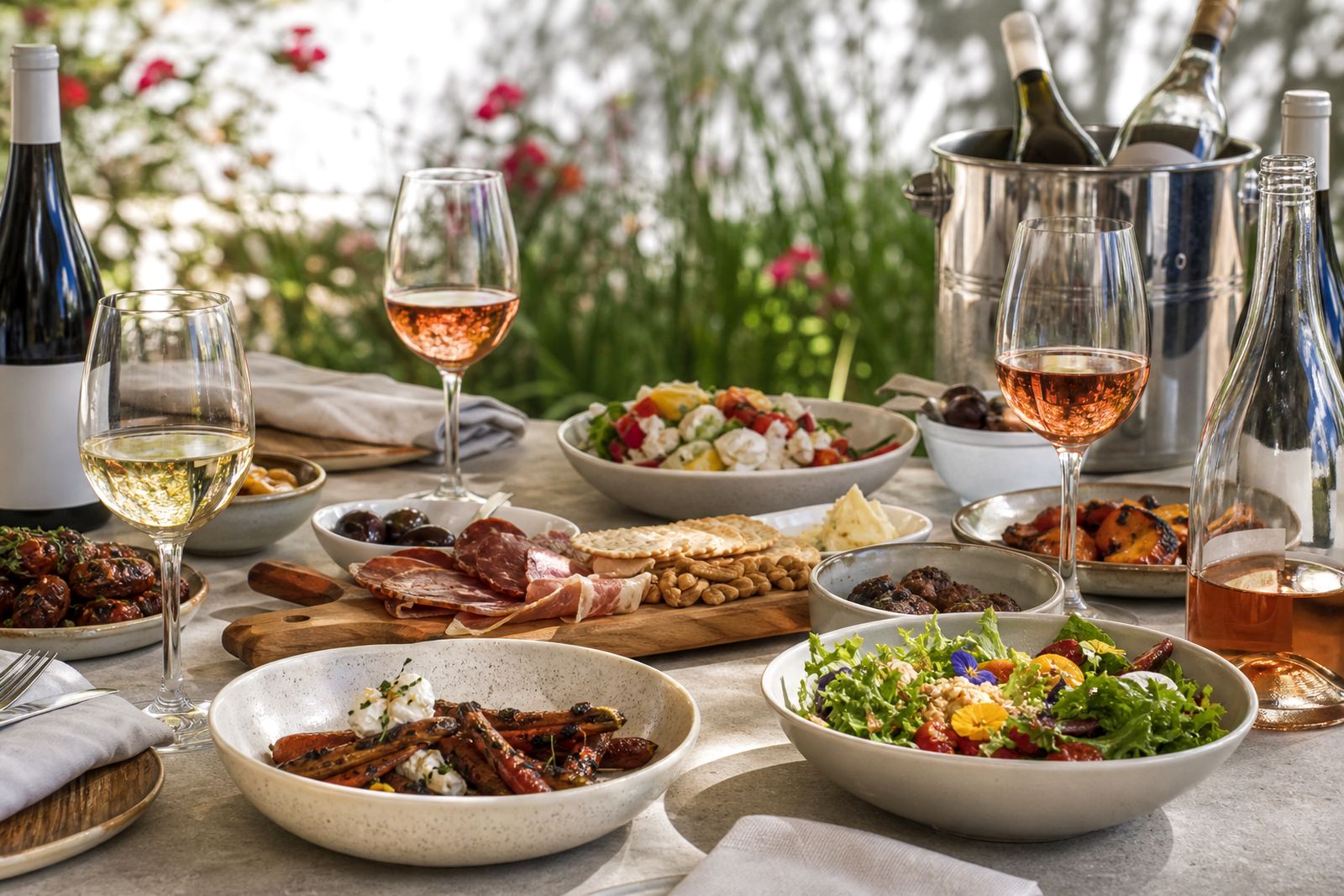
In that kind of setting, a bright white, a dry or off-dry bubbly and a light rosé will usually cover most of the meal. Guests can move between dishes without one glass fighting the next bite. It also suits South African gatherings where the food changes from mild to hot as the night goes on.
If you are hosting, keep the wines chilled and give people room to compare. Spice pairing is often about pace, not just the first sip.
Simple serving tips that make a real difference
Good pairing is not only about which wine you buy. Serving temperature, glass choice and the order of tasting all matter, especially when the food has chilli. A wine served too warm can feel louder, while one that is too cold can lose flavour.
- Serve white wine and bubbly properly chilled, but not icy cold.
- Keep water on the table so guests can reset their palate between bites.
- Start with the lightest wine before moving to richer styles.
- Avoid very hot food straight from the pan, let it settle for a few minutes first.
If you are planning a club night, birthday supper or a small corporate tasting, spice can make the evening more interesting. The trick is to give the wine enough freshness to stand beside the heat, not try to beat it.