
A Tokai Brief Built Around Winter Comfort
The client was a private host in Tokai, Cape Town, arranging a winter evening for friends and family who enjoy wine but did not want a formal sit-down dinner. The brief was clear: create a cosy tasting around richer reds and comfort food pairings, keep the group engaged, and make the whole night feel easy to host in a residential setting.
We planned the evening around 18 guests, with a service style that worked in a home lounge and dining area rather than a restaurant venue. That meant paying attention to glassware counts, serving temperatures, table flow and the timing of each pour. Tokai winters can be damp and cool, so the menu had to feel warming without becoming heavy or overcomplicated.
The Constraints That Shaped The Pairing
The main challenge was space. The host wanted guests to move comfortably between the kitchen, dining table and sitting area, with no bottlenecks and no clutter on the counters. We also had to work around load-shedding risk and limited prep time on the day, so the service plan needed to be practical and not dependent on a long stretch of uninterrupted power.
- Private home setting in Tokai with limited service space
- Evening event for 18 guests, mixed wine knowledge levels
- Winter conditions and cooler room temperatures
- Need for low-fuss service and quick reset between pours
- Power backup planning for chilled bubbly and lighting
We also kept an eye on residential noise and parking access, since the area is quiet and the host wanted neighbours to be considered. The evening had to feel polished, but not noisy or over-styled.
What We Supplied For The Night
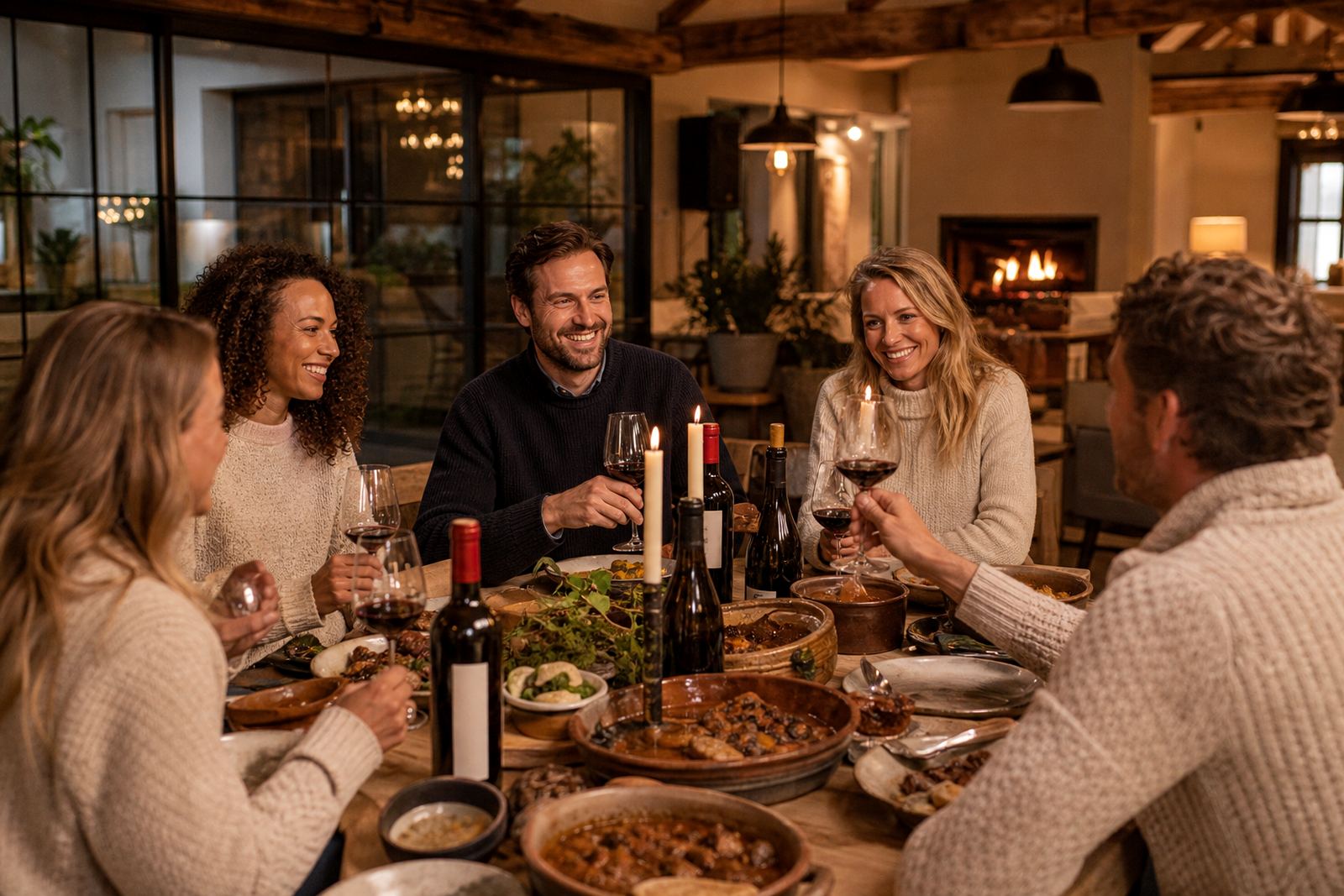
We curated a tasting line-up of South African reds with enough variety to show winter texture without losing the thread of the evening. The selection leaned into darker fruit, gentle spice and supple tannins, then moved toward one richer bottle for the final course. Alongside that, we matched the wines to food that makes sense in a Cape Town winter home setting.
The pairings were practical and familiar: slow-cooked meat, mushroom dishes, roasted vegetables, creamy potato sides and a final savoury course that could stand up to the last pour. We also supplied tasting notes in a format that was easy to follow, so guests could compare aroma, acidity, tannin and finish without feeling lectured.
- Curated red wine selection for winter service
- Food pairing guide for the host and kitchen team
- Printed tasting notes for guests
- Service order plan for each course and pour
- Glassware and serving temperature guidance
How The Evening Was Run
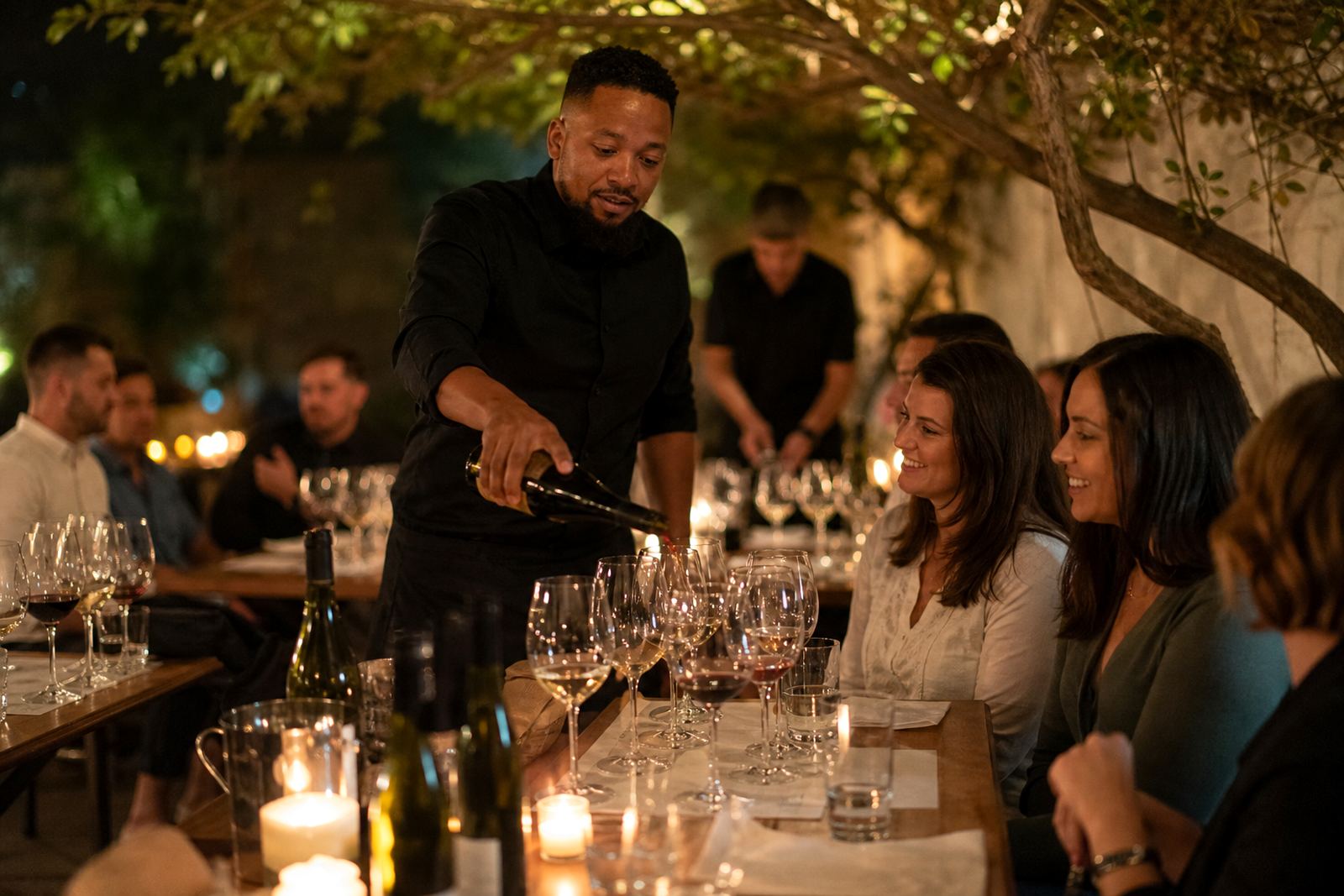
Our team arrived early to set the pacing and check the room layout. We handled the tasting flow so the host could stay with guests instead of running between kitchen and table. Bottles were opened in sequence, decanted where needed, and kept at the right temperature throughout the evening. The tasting moved from lighter structure to fuller style, which helped the group settle in and compare the wines more clearly.
The format was conversational. We gave each wine enough context to feel meaningful, but kept the language practical and unpretentious. Guests asked about grape varieties, local regions and why certain reds work better with winter food. There was a good mix of first-time tasters and regular wine drinkers, so the evening needed balance and a friendly pace, not a technical masterclass.
Because the home had a smaller serving area, we kept the back-of-house work tidy and quiet. That made the whole experience feel calm, even when plates were changing and glasses were being refreshed. It is the kind of detail that often gets missed but makes a real difference in a private setting.
Timeline, Delivery And Results
The project ran over three weeks from first brief to event night. Week one was the tasting concept and wine selection, week two covered pairings, quantities and logistics, and week three was final confirmation, delivery and setup. That gave enough time to plan properly without stretching the host’s schedule.
- Week 1: brief, guest count and tasting direction
- Week 2: wine curation, food pairing mapping and service plan
- Week 3: delivery, setup and event coordination
The result was a smooth winter tasting that felt considered from the first glass to the last. Guests stayed engaged, the food and wine held together well, and the host said the evening felt simpler than expected to run at home. The stronger reds suited the cold weather and the pairing choices helped the wines show their best side.
We also noticed that the group responded well to the seasonal structure. People were less interested in formal scoring and more interested in how the wines worked with the meal, which is exactly the right energy for a private winter gathering in Tokai.
What We Would Repeat For Another Winter Home Tasting
If we were doing this type of event again, we would keep the same clear seasonal structure and the same simple service rhythm. For a private home, that is usually the best way to avoid stress and keep guests focused on the tasting rather than the logistics.
We would also repeat the practical planning around temperature, lighting and movement in the house. A winter evening can go off track quickly if wines are served too warm, the room feels cramped or the host is stuck managing everything at once. With the right prep, though, a home tasting can be every bit as polished as a venue event.
For Tokai and the wider southern suburbs, this format works especially well for birthday gatherings, small corporate evenings and family celebrations. It suits guests who want good South African wine, hearty food and a relaxed night without unnecessary formality.
Key facts
| Project | Tokai Winter Pairing |
|---|---|
| Client type | Private home host |
| Town | Tokai, Cape Town |
| Event format | Winter tasting with food pairings |
| Guest count | 18 guests |
| Timeline | 3 weeks from brief to event night |